- Which program model applies: talk-only, talk-and-text or approved-app smartphone
- Which functions must be absent from the device rather than hidden by a launcher
- Expected behavior after factory reset, SIM change and OS update
- Language, keyboard and RTL requirements for the target community
- Who reviews the sample and who signs acceptance for the program
Kosher Phone Program Deployment for Validated Restricted-Use Rollouts
Android phone programs prepared around approved functions, community rules, app allowlists, sample validation and batch staging while the approval body keeps authority over what is accepted.
Diperbarui
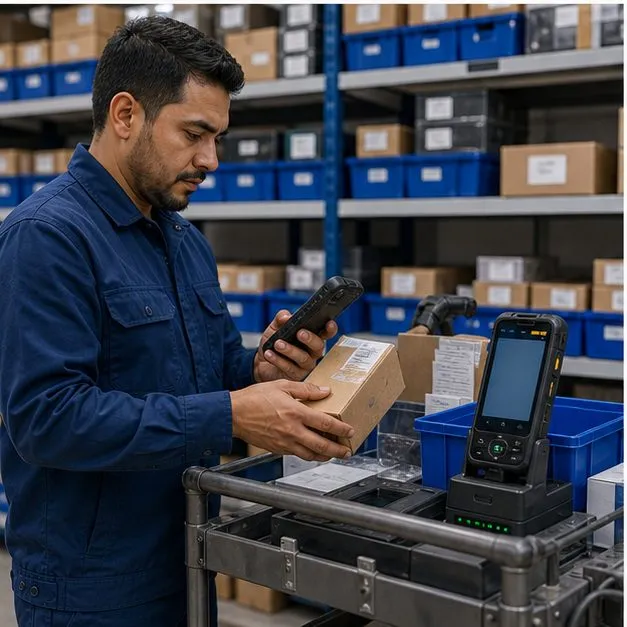
Brief: separate community rules from device build assumptions
A kosher phone program is defined by the functions a community or approval body allows, not by a generic handset category. The same phrase can mean a talk-only handset in one community, a talk-and-text device in another and an approved-app smartphone in a third — so a program that starts from a device name instead of a rule set usually discovers the mismatch at review time, when it is most expensive. Vantora starts every program from a redacted brief that separates the community rule set from the device build assumptions: which functions are allowed, which are conditional, which must be absent rather than merely hidden, how the device should behave after a factory reset, which languages and keyboards are required, which SIM and carrier assumptions apply, what the packaging and support path look like and who signs acceptance for the sample. At feasibility stage the brief can stay redacted — program owners and distributors do not need to expose member lists, commercial terms or the identity of the approval body to receive a realistic build assessment. The output of this phase is a draft feature matrix that every party reviews before any hardware is committed.
Takeaway. Community rules and the device build are separate. This page does not publish an approval and does not publish a week total.
Collaborate with the approval body through a responsibility matrix
Vantora does not decide what is acceptable to a community, and no device supplier should claim to. The working model is a responsibility matrix agreed at the start of the program: the approval body keeps authority over what is accepted and may inspect any behavior it chooses; the program owner holds the rule set, the community relationship and the submission; Vantora holds the validated build, the technical evidence and batch consistency. In practice the loop runs in one direction: rules are received and translated into a draft feature matrix; the program owner confirms the matrix; a sample is built and validated against it; the technical validation record travels with the sample to the approval body through the program owner; feedback returns as written matrix changes, and the cycle repeats until the sample is accepted. Keeping this loop document-driven is not bureaucracy — verbal understandings about what a device blocks are the most common source of failed reviews and late rebuilds in restricted-use programs. The production side — batch consistency, labeling and re-verification after a firmware change — is covered in kosher phone manufacturing.
- Approval body: inspects the sample and decides acceptance for its community
- Program owner: holds the rule set, the submission and member communication
- Vantora: holds the validated build, acceptance evidence and batch staging records
- Every rule change is written into the feature matrix before it reaches a build
Send a redacted brief. We reply within 1 business day.
Build: prepare phones around the approved feature matrix
The build layer can include fixed launcher behavior, approved app allowlists, browser-free options, blocked sideloading, Hebrew, Yiddish and English language setup, default permissions, packaging, SIM/APN assumptions and management enrollment. Which mechanism delivers each control is a model-level decision: some restrictions can be applied through Android Enterprise and management policy, some need OEM configuration support, and the deepest reset and recovery behavior may require a firmware path with longer lead times. Vantora keeps this mapping explicit in the build specification, because a control that appears in a policy console does not necessarily behave the same on every model or after every update. Each program model below carries a different validation focus, and mixing models in one fleet without separate validation is a common failure mode.
| Program model | Typical allowed surface | Validation focus |
|---|---|---|
| Talk-only | Calls, contacts and emergency calling | No browser, app store or unapproved data path reappears after reset. |
| Talk-and-text | Calls, contacts, SMS and approved settings | Messaging behavior, language support and restriction persistence are checked. |
| Approved-app smartphone | Specific work, navigation, banking or community apps | Allowlist, launcher, permissions, update method and web escape paths are reviewed. |
| Partner-led rollout | Neutral or private-label delivery with batch records | Sample version, packaging and handoff notes are tied to the approved build. |
Validate: acceptance matrix items the review can rely on
Validation turns the feature matrix into an acceptance matrix: each allowed, restricted or conditional item becomes a testable row with an expected result and a recorded outcome on the actual sample. Vantora checks reset behavior, recovery mode, sideloading, store access, captive portal, WebView surfaces, browser entry points, settings restrictions, app update paths, language display and SIM behavior, and records where each restriction is enforced — launcher, management policy, OEM configuration or firmware — so reviewers understand how durable it is. The result is a technical validation record for the device build; religious or community acceptance remains entirely with the program owner and its approval body. Known limitations are written down rather than smoothed over: an approval body that discovers a limitation on its own after acceptance is a far larger program risk than a limitation disclosed in the review packet.
- Dialer and contacts open; browser package absent or blocked; store entry points return to the launcher
- Factory reset from settings and from recovery returns the device to the restricted state
- Captive-portal sign-in cannot be widened into open browsing
- Approved app updates install only through the controlled path
- Hebrew and Yiddish display, keyboard and RTL layout behave as specified
- SIM change and APN edits do not expose unapproved data paths
| Checklist category | What to record | What changes the checklist |
|---|---|---|
| Web escape paths (browser, WebView, captive portal, in-app links) | Recorded on the project acceptance matrix | Grows whenever an approved app embeds web content |
| Reset, recovery and update persistence | Recorded on the project acceptance matrix | Settings reset, recovery reset, OTA and SIM-change scenarios |
| App allowlist and update path | Recorded on the project acceptance matrix | Scales with the number of approved apps in the matrix |
| Language, keyboard and RTL behavior | Recorded on the project acceptance matrix | Applied when Hebrew or Yiddish support is in scope |
| Telephony, SIM and emergency calling | Recorded on the project acceptance matrix | Emergency calling behavior is always verified |
Plan: typical phases from redacted brief to first community batch
Program owners usually need a calendar answer before they can schedule an approval review or a community announcement. The phases below are the ones a single-model program with an established rule set usually walks. They stretch when the rule set is still being negotiated, when a firmware path is required or when the approval body requests changes after first review. The calendar is confirmed in the brief response, subject to model, OEM path and quantity.
| Phase | What to confirm | What changes the phase |
|---|---|---|
| Brief review and feasibility response | Confirmed in the brief response | Completeness of the redacted brief; model availability |
| Draft feature matrix and device path selection | Confirmed in the brief response | Rule-set clarity; whether policy-only control is sufficient |
| Sample build and internal validation | Confirmed in the brief response | OEM or firmware involvement extends the upper end |
| Approval-body review cycle | Program-owned; the cycle length is confirmed with the approval body | Set by the approval body and its own calendar, not by Vantora |
| Batch staging after acceptance | Confirmed in the brief response | Quantity, packaging scope, labeling and preload requirements |
Stage: prepare batches for the program channel
Batch staging can include private-label packaging, inserts in the required languages, SIM or APN assumptions, asset labels, serial or IMEI records, app preload, language defaults and the approved feature state loaded and verified before cartons close. For community programs the channel matters as much as the device: batches may go to a distributor, a community office or directly to a program desk, and each path needs its own handoff notes and support boundary so a member with a question is routed to the program, not to an anonymous factory. Staging against the accepted sample is what makes the program repeatable — the alternative, configuring devices by hand after delivery, is exactly where restricted-use programs drift away from the version the approval body reviewed.
Rollout: keep every batch tied to the accepted build
Kosher phone programs are especially sensitive to silent changes: an OS update, an alternate model revision, a changed app update path or different reset behavior can alter the approved surface without anyone intending it. Vantora records the accepted sample version, feature matrix, build path, app versions, packaging state, known limitations and the batch staging checklist, and checks later orders against that baseline before shipment. When a change is unavoidable — a component substitution or an OS version that cannot be held — it is surfaced to the program owner as a written delta against the acceptance matrix, so the approval body can re-review only what changed instead of repeating the whole cycle. Batch consistency is therefore an evidence practice, not a promise: every reorder can be compared line by line with the build that was accepted.
A program-owned matrix of allowed, restricted and conditional phone functions.
A technical checklist covering reset, recovery, sideloading, browser, store and settings paths.
Fungsi yang Diizinkan & Dibatasi
| Voice calls & contacts | Diizinkan | |
| Emergency calling | Diizinkan | |
| SMS / text | Bersyarat | Only when the program allows talk-and-text |
| Approved apps | Bersyarat | Per the program allowlist |
| Open internet / browser | Dibatasi | |
| App store / APK sideloading | Dibatasi | |
| Camera | Bersyarat | Removed, disabled or allowed per program |
| Social media | Dibatasi | |
| Restriction behavior after reset | Bersyarat | Validated per model and build path |
What to send us
| Item | Why we need it | Example format |
|---|---|---|
| Restriction list | The build is reviewed against the rules you list, not against an implied approval | Allowed, conditional, and absent behaviors |
| Default language | Locale, keyboard, and printed material are acceptance inputs | Arabic and English, or Spanish and Portuguese, as the default you need |
| Reset and recovery | The sample should show what returns after reset and who can recover it | Factory reset expected result, and the support path |
| Market and radio | Region fit is checked per market, not assumed from the model name | Country and carrier or band notes |
| Quantity and reorder | A planning band is not a delivery guarantee | A range, and whether you expect a reorder |
Send a redacted brief. We reply within 1 business day.
Pertanyaan Umum
Does Vantora decide whether a phone is accepted for a kosher program?
No. Vantora provides the device build, the technical validation record and batch staging support. The program owner and its approval body decide what is accepted for that community and that version. The responsibility matrix agreed at the start of the program keeps this boundary explicit, so the technical evidence supports the review without ever substituting for it.
Can Vantora support talk-only phones?
Yes, when a suitable device path is available. Calls, contacts and emergency calling can be scoped as the allowed surface while browser, store, app and data paths are reviewed against the program matrix. Talk-only builds put most of their validation weight on reset and recovery persistence, because the approved surface is small and any escape path is immediately visible to the community.
Can a kosher smartphone include approved apps only?
Yes. An approved-app smartphone can combine a fixed launcher, an app allowlist, preload, permission review and a controlled update path, subject to model and platform validation. The acceptance matrix then grows with the app list — each approved app adds allowlist, update-path and embedded-web checks — which is why approved-app programs typically carry the largest validation scope.
Can Hebrew and Yiddish language requirements be handled?
Yes. Language, keyboard, font and RTL assumptions can be included in the sample validation checklist for the selected device path, the added checks are recorded on the project acceptance matrix. Display language, input method and mixed-direction text in approved apps are verified on the actual sample rather than assumed from a specification sheet.
How do you prevent restrictions from changing in later batches?
The accepted sample, feature matrix, build path, app versions, language state and known limitations are recorded as a baseline, and later batches are checked against that baseline before shipment. When a platform change is unavoidable, it is presented to the program owner as a written delta against the acceptance matrix so the approval body can re-review only what changed.
What should be in the first redacted brief?
The program model (talk-only, talk-and-text or approved-app), the current rule set or a summary of it, the target quantity band, market and carrier assumptions, language requirements, packaging expectations and who will review the sample. End-customer identities, member lists and commercial terms are not needed at feasibility stage — the brief is designed to stay redacted until the program owner chooses otherwise.
How long does a program typically take from brief to first batch?
For a single-model program with an established rule set, the Vantora-controlled phases — feasibility, feature matrix, sample build and validation, then batch staging — are confirmed in the brief response. Approval-body review cycles sit outside that plan and are owned by the body. This page does not publish a week total.
What happens if the approval body rejects the sample?
Feedback is translated into written changes to the feature matrix, the affected build items are revised, and the changed rows of the acceptance matrix are revalidated. Where the change is contained — for example a launcher behavior or an app substitution — only the delta needs a new validation pass; a change of device path or model restarts sample validation.
Ceritakan alur kerja dan aturan Anda.
Kami mengubah persyaratan menjadi perangkat yang siap diterapkan.