MIL-STD-810 Method Selection for Android Field Devices
Select environmental tests from the way the device is carried, mounted and operated. Compare the method, procedure and report conditions with the Android configuration you plan to deploy.
Atualizado
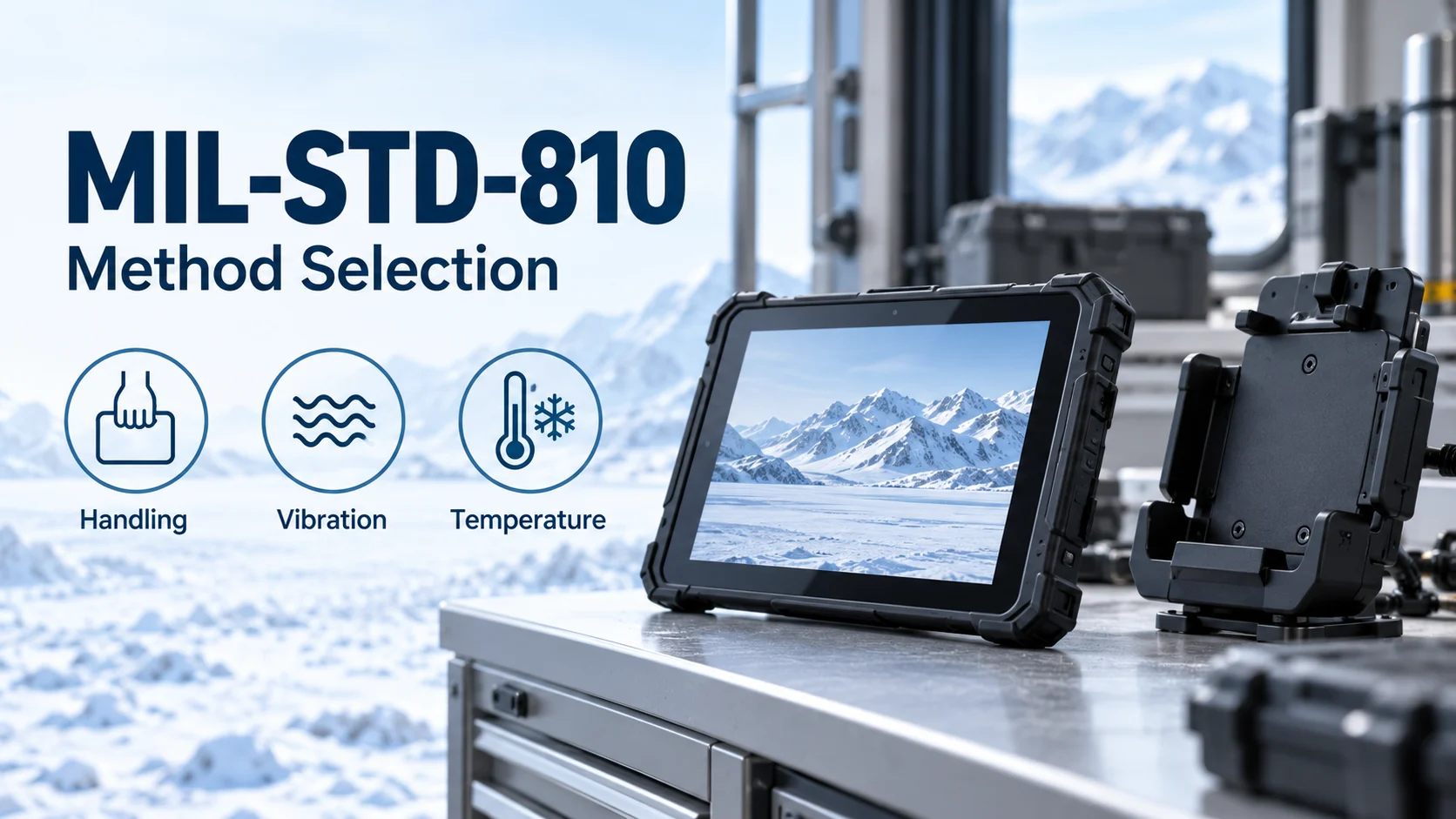
What should MIL-STD-810 evidence cover?
MIL-STD-810 method selection for an Android field device starts with its service conditions: handling, transport, storage and powered use. Evaluate a supplier's claim through the exact edition, method, procedure, tested configuration and recorded results. That evidence lets you compare the offered device with your deployment requirements. The standard's environmental tailoring approach is described in the NASA catalogue entry for MIL-STD-810. For a project involving rugged Android tablets, first identify whether the unit travels in a case, is carried by an operator, or stays powered in a vehicle dock. Each state leads to different test questions. Use the H Change 1 method references below to build a selected-method review with the supplier and test provider.
- Identify the exposure: a handling drop, mechanical shock during use, vehicle vibration, hot storage or cold operation.
- Name the test: edition and change notice, full method number, procedure and tailored conditions.
- Match the configuration: device revision, case, battery, dock, cables and operating state.
- Read the outcome: criteria, observations, deviations and the functions checked during or after exposure.
Select the method from the field scenario
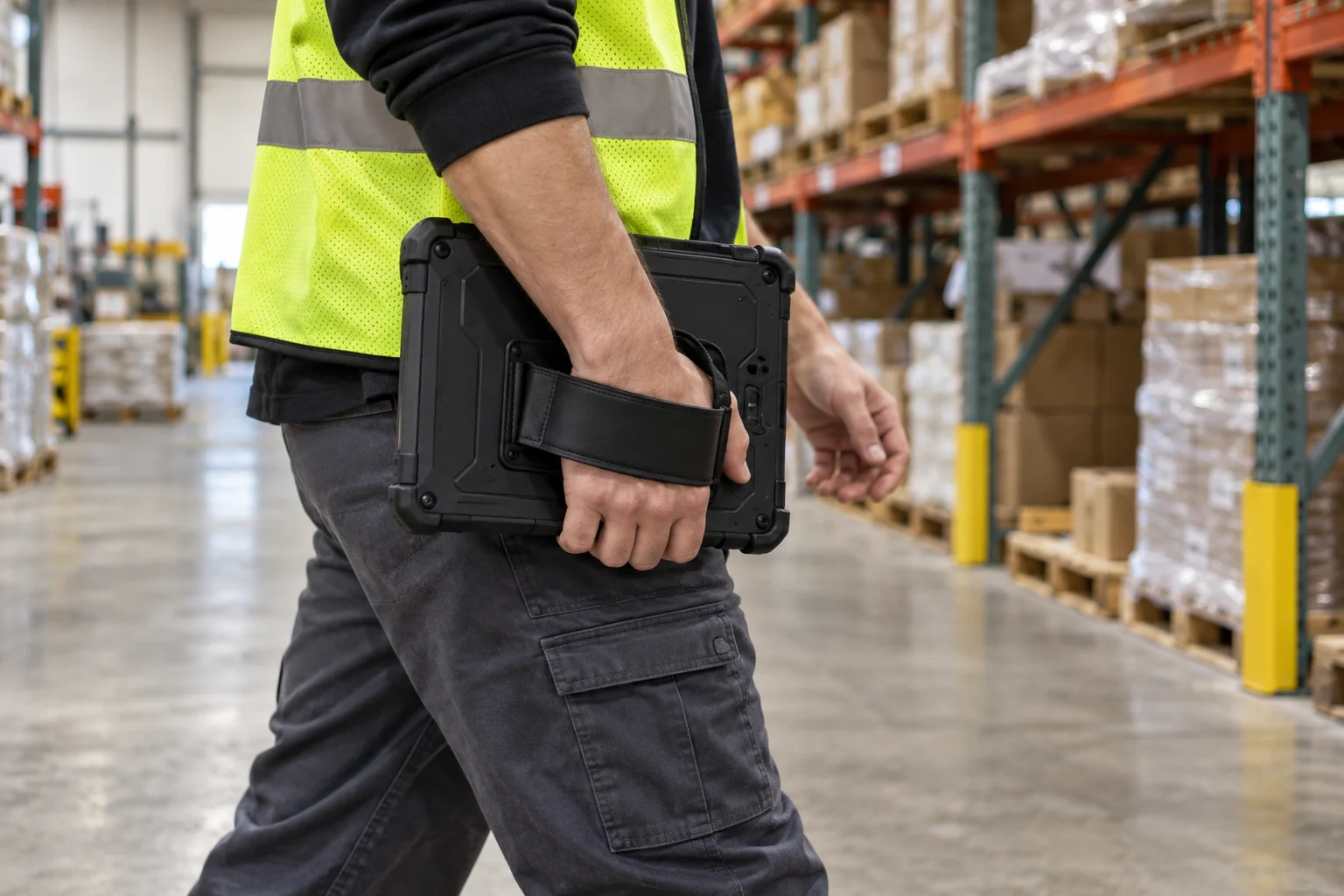
Choose the procedure that matches what the device must do during the exposure. In MIL-STD-810H Change 1, Method 516.8 covers shock; Procedure I addresses functional shock, IV transit drop and VI bench handling. Those distinctions matter when a report is summarized only as “Method 516.” The table identifies candidates for a test-plan discussion. Set severity, duration, sequence and acceptance criteria from the actual service-life profile with the responsible engineer or laboratory.
| Field scenario | Method and procedure | Conditions to compare |
|---|---|---|
| Tablet handling and transit drops | 516.8, IV — Transit Drop | Field/transit configuration, applicable drop scenario, height, surface, orientations, specimen allocation and operational checkout |
| Device must function through mechanical shock | 516.8, I — Functional Shock | Waveform, amplitude and duration, directions, number of shocks, mount and monitored functions |
| Secured transport or vehicle-mounted use | 514.8, I — General Vibration | Application category, fixture, spectrum, levels, axes, duration and powered state |
| High-temperature storage or use | 501.7, I — Storage; II — Operation | Temperature cycle, stabilization, exposure time, power state and workload; consider III for a relevant standby-to-operating scenario |
| Low-temperature storage, use or gloved handling | 502.7, I — Storage; II — Operation; III — Manipulation | Temperature and time, startup/operating checks and the handling task performed in cold-weather clothing |
| Servicing on a maintenance bench | 516.8, VI — Bench Handling | Servicing configuration, handling sequence and functional checks |
Read a MIL-STD-810H drop-test claim beyond the height
For a transit-drop claim, compare the applicable scenario, impact surface, orientations and drops assigned to each specimen. Table 516.8-IX gives a useful conditional reference: for a man-packed or man-portable test item and case weighing under 45.4 kg (100 lb), with a largest dimension under 91 cm (36 in), the logistic transit-drop entry is 122 cm (48 in) and 26 face, edge and corner drops. Use that row only when its configuration and logistic-transit conditions apply. Table 516.8-I identifies Procedure IV as non-operational exposure; its checkout steps establish what is examined after the drops. If the device must keep functioning through shock, include Procedure I in the test-plan discussion.
| Report field | Standard detail | Procurement consequence |
|---|---|---|
| Height and size category | 122 cm (48 in) for the under-45.4 kg, under-91 cm man-portable/man-packed entry | Match weight, largest dimension and test configuration before comparing the quoted height. |
| Impact surface | Default: steel backed by concrete. Note 1 permits concrete or 5 cm (2 in) plywood backed by concrete under its specified conditions. | Record the actual surface and its justification: service representativeness or the stated compressive-strength condition. Equal heights on different surfaces need engineering interpretation. |
| Drop allocation | 26 face/edge/corner drops; Note 5 permits distribution among no more than five test items | Obtain specimen IDs and the drops assigned to each. An aggregate sequence does not establish 26 drops on every unit. |
| Condition and function afterward | Procedure IV includes damage examination and operational checkout | Compare recorded damage and functional results with the criteria agreed before the test. |
Match vibration evidence to the installed dock
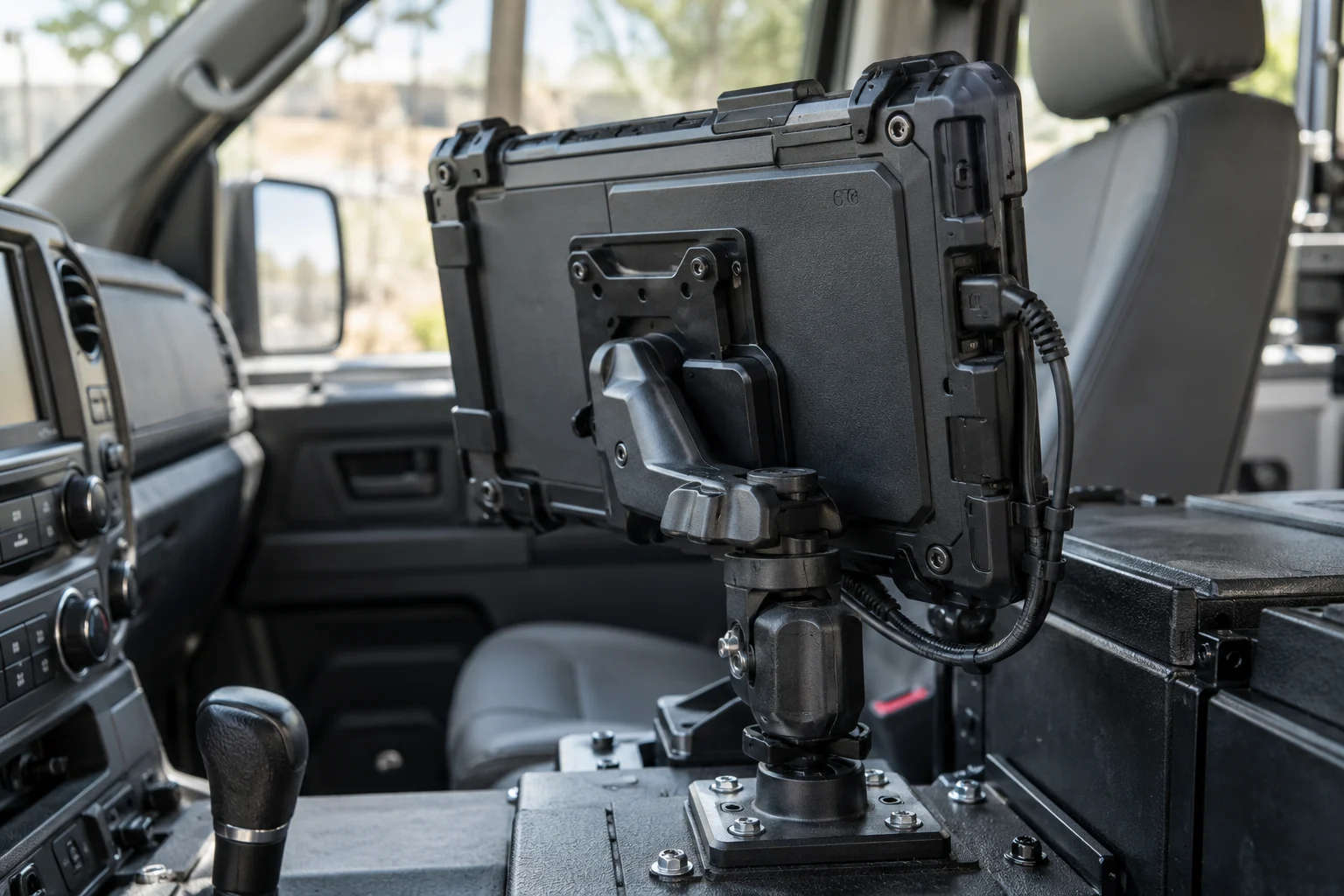
For a powered vehicle installation, compare the tested fixture, mount and power connections with the installed assembly. Method 514.8 Procedure I covers general vibration, including secured cargo and installed equipment, with the applicable category and profile selected for the exposure. A shipping configuration and a powered tablet in a dock represent different operating conditions. The report should identify the vibration spectrum or profile, levels, frequency range, axes and duration alongside the mounting arrangement. For an Android deployment, define which functions are monitored during exposure and checked afterward. Charging interruptions, connection loss, a loose cradle or an app restart are useful project observations when the workflow depends on those functions. Record bracket geometry, attachment points, cable routing and the tested power state so the responsible engineer can assess differences in the proposed installation.
Separate temperature storage, operation and handling
Select a temperature procedure for the device state that matters: surviving storage, operating a workload or being handled in cold-weather clothing. Method 501.7 separates high-temperature storage (I), operation (II) and tactical standby-to-operation (III). Method 502.7 separates low-temperature storage (I), operation (II) and manipulation (III). Compare the actual cycle, exposure time and stabilization requirements, then read the functional results for that state. For the Android project, define cold startup, touch input, scan or camera use, saved-data recovery and charging checks where relevant to the intended workflow and the device's specified limits. Keep the Android build, app version, battery and accessories identifiable. Storage evidence answers a storage question; an operating workflow needs the corresponding operating evidence.

Read the rugged Android test report against the released build
Read the detailed report for each test and compare its specimen configuration with the device build proposed for delivery. MIL-STD-810H Change 1, Part One Annex A, Task 406 §406.2.2.2 describes final-report content, including setup, conditions, operation, equipment/calibration, results, deviations and a met/not-met statement for each criterion. Part One §5.14 ties failure criteria to the specified requirements and test purpose. For procurement, add traceability to the exact hardware, firmware, application and policy baseline. The Android-specific checks below are project acceptance recommendations. Record their expected and observed outcomes in the sample acceptance matrix, linked to the laboratory report reference.
| Evidence group | What to inspect | How to use it |
|---|---|---|
| Report and specimen identity | Report identifier/date, issuing laboratory, exact model/variant, hardware revision and specimen IDs | Trace the supplied document to the offered device and each tested specimen. |
| Test definition and setup | Edition/change, method, procedure, purpose, configuration, setup photographs/diagrams and instrumentation/calibration | Match the claimed test with the procedure and physical assembly actually examined. |
| Actual exposure | Drop surface and allocation; vibration profile and mount; temperature cycle and stabilization; durations and operating state | Compare the report conditions with transport, storage and use in the project. |
| Results and exceptions | Criteria, observations, damage, met/not-met outcomes, deviations and anomaly/corrective-action records | Resolve each exception against the intended requirement before acceptance. |
| Android configuration — project addition | Android/firmware build, app version, policy baseline, battery, case, port covers, dock and cables as applicable | Have the engineer or lab assess whether differences from the tested configuration affect coverage. |
| Workflow checks — project addition | Relevant touch, scanner, camera, connectivity, charging, saved-data and recovery results at the agreed test stages | Bind environmental exposure to the functions needed for the actual job. |
Decide which coverage gaps need action
Approve environmental coverage against the agreed configuration and criteria, with an explicit disposition for each mismatch. A useful decision record links the deployment requirement to a report section, observed result and responsible owner. When a case, dock or build differs, the engineer or laboratory should assess applicability and specify any additional work. This keeps supplemental testing focused on the uncovered condition.
| Finding | Next decision |
|---|---|
| Configuration, exposure and results match the requirement | Record the covered condition and retain its report reference with the accepted build. |
| A method is named but the procedure or conditions are missing | Obtain the detailed report or an issuing-lab clarification before closing coverage. |
| Evidence covers storage or packaged transport; the project needs powered use | Define the operating exposure and functions with the test provider, then obtain evidence for that scope. |
| Hardware, accessories, mounting or software differ | Request an applicability assessment and agree any supplemental checks and acceptance criteria. |
| A required function fails or a deviation remains unresolved | Assign corrective action and the necessary repeat checks before accepting that requirement. |
Bring the method list into the device project
Use testing and certification support to connect model-specific evidence with the wider sample acceptance plan. For a field-device review, send your project requirements with the proposed device and accessories, claimed method numbers and procedures, and the laboratory report's scope. Include the handling or mounting scenario and the functions that must work so the review can identify the relevant evidence and next checks.
Standard references for the review
Method references and the logistic drop values above use the U.S. Department of Defense's MIL-STD-810H with Change 1, Environmental Engineering Considerations and Laboratory Tests, dated 18 May 2022. The NASA standards catalogue describes the standard's service-life tailoring scope. Use the edition identified in the laboratory report when checking its detailed requirements.
- Shock and transit drop: Method 516.8, Table I, §2.2.2, Table IX with Notes 1 and 5, and §4.6.5.3.
- Vibration: Method 514.8, §§2.2.2, 2.3 and 2.4; high and low temperature: Methods 501.7 and 502.7, §2.2.2.
- Report content and outcomes: Part One Annex A, Task 406 §406.2.2.2, and Part One §5.14.