PAYG Device Locking for Financed Android Rollouts
Prepare financed Android phones and tablets with policy-controlled enrollment, payment-state behavior, known limitation disclosure and batch validation before devices reach the field.
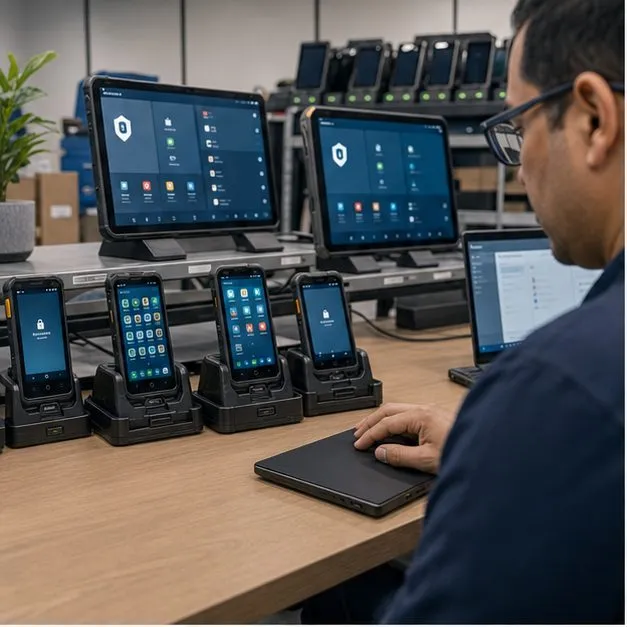
Financed devices fail when lock behavior is assumed, not validated
PAYG and financed device programs depend on a hard operational promise: the device state should reflect payment and account status without breaking legitimate use, support, updates or recovery. The problem is that locking behavior depends on the device model, Android build, enrollment method, management stack, reset path, connectivity and local support process. Vantora treats PAYG device locking as a validated rollout, not a generic feature checkbox.
The build must connect payment state, policy and device behavior
A financed device rollout usually involves a lender, distributor, app platform, management stack and support team. The device build needs to define what happens when an account is current, overdue, recovered, transferred, replaced or written off. It also needs a clear boundary for what the device should still allow, such as emergency access, support contact, permitted apps, data sync or unlock recovery. Which layer can actually enforce each of those behaviors is compared in custom launcher vs kiosk mode vs MDM.
| State | Device behavior to define | Validation focus |
|---|---|---|
| Current | Normal approved app and device access | Enrollment, app availability and update path |
| Grace period | Warnings or limited notification behavior | Message display, timing and user support path |
| Overdue | Restricted access or lock state | Allowed exceptions, reset behavior and recovery flow |
| Recovered | Return to approved device state | Unlock timing, data state and policy refresh |
| Transferred or replaced | Account reassignment or replacement flow | Serial record, ownership record and support note |
Brief: define the commercial rule before the technical rule
The technical build cannot be valid until the commercial rule is written. The brief should specify the payment platform, account identifier, connectivity assumptions, overdue timing, grace-period messaging, support contact, allowed apps, data handling, repair or replacement path, target country and whether the device uses GMS or AOSP. These inputs become the device build spec and the acceptance matrix.
Build: policy-controlled financed devices
The build can combine MDM or EMM enrollment, a custom management agent, app preload, launcher behavior, notification flow, policy refresh and batch staging. Which mechanism is appropriate depends on the device, management stack and Android mode. Vantora avoids absolute bypass-resistance claims and validates the actual behavior that the project needs: payment-state updates, reset behavior, support recovery and user-visible messaging.
Validate: reset, offline and recovery paths matter most
PAYG projects often focus on the lock screen and miss the supporting paths. A useful sample test covers factory reset flow where applicable, offline period behavior, SIM change behavior, account recovery, app update, policy refresh, support contact and replacement-device workflow. Known limitations are documented because financing programs need operational truth more than marketing certainty.
A validation matrix for current, grace, overdue, recovered and replacement states.
A living library of OEM, Android, management and support-path limitations disclosed before rollout.
Stage: financed fleets need serial-level records
A financed device batch should ship with records that connect device identifiers to configuration and program state. Typical records include IMEI or serial range, app and policy version, enrollment status, packaging, region, SIM assumptions and batch date. These records support unlock, recovery, warranty and replacement workflows after devices leave the warehouse.
Boundaries for a responsible PAYG project
Vantora can help validate device behavior, staging and the policy-controlled build, but the financing program owns credit policy, customer communication, local law, collection rules and support operations. Those responsibilities should be named in the responsibility matrix before the sample is accepted.
| Area | Common owner | Vantora contribution |
|---|---|---|
| Credit and collection rules | Financing provider | Translate required states into device build requirements |
| Payment platform | App or fintech team | Validate account-state signal against device behavior |
| Device policy | MDM/EMM or management stack | Test restrictions, refresh and recovery paths |
| Local compliance and notices | Program owner and counsel | Stage approved messaging and package materials |
| Batch record | Vantora and program owner | Record accepted build, serial range and policy version |
FAQ
Can Vantora make financed devices impossible to bypass?
No responsible supplier should make an absolute bypass claim. Vantora validates the required payment-state behavior on selected hardware and documents known limitations, dependencies and recovery paths before rollout.
Does PAYG locking require a custom ROM?
Not always. Some programs can use MDM/EMM policy or a management agent. Deeper platform work depends on the device, OEM support and required behavior and is confirmed during feasibility.
Can devices still show support information when locked?
Yes, support contact, allowed exceptions or recovery instructions can be scoped as part of the lock-state behavior, subject to the chosen mechanism and device validation.
What should be tested before production?
Test current, grace, overdue, recovered and replacement states, plus offline behavior, reset path, SIM assumptions, policy refresh, app update and support recovery.
Who owns customer payment policy?
The financing provider or program owner owns credit policy, notices, collection rules and local legal review. Vantora owns device build validation and staging within the agreed scope.
Tell us your workflow and rules.
We turn requirements into deployment-ready devices.