Custom Android Device Manufacturing for Validated Rollouts
Vantora helps partner-led and app-led projects turn proven Android phones and tablets into app-ready, policy-controlled and rollout-validated batches, with sample acceptance before production.
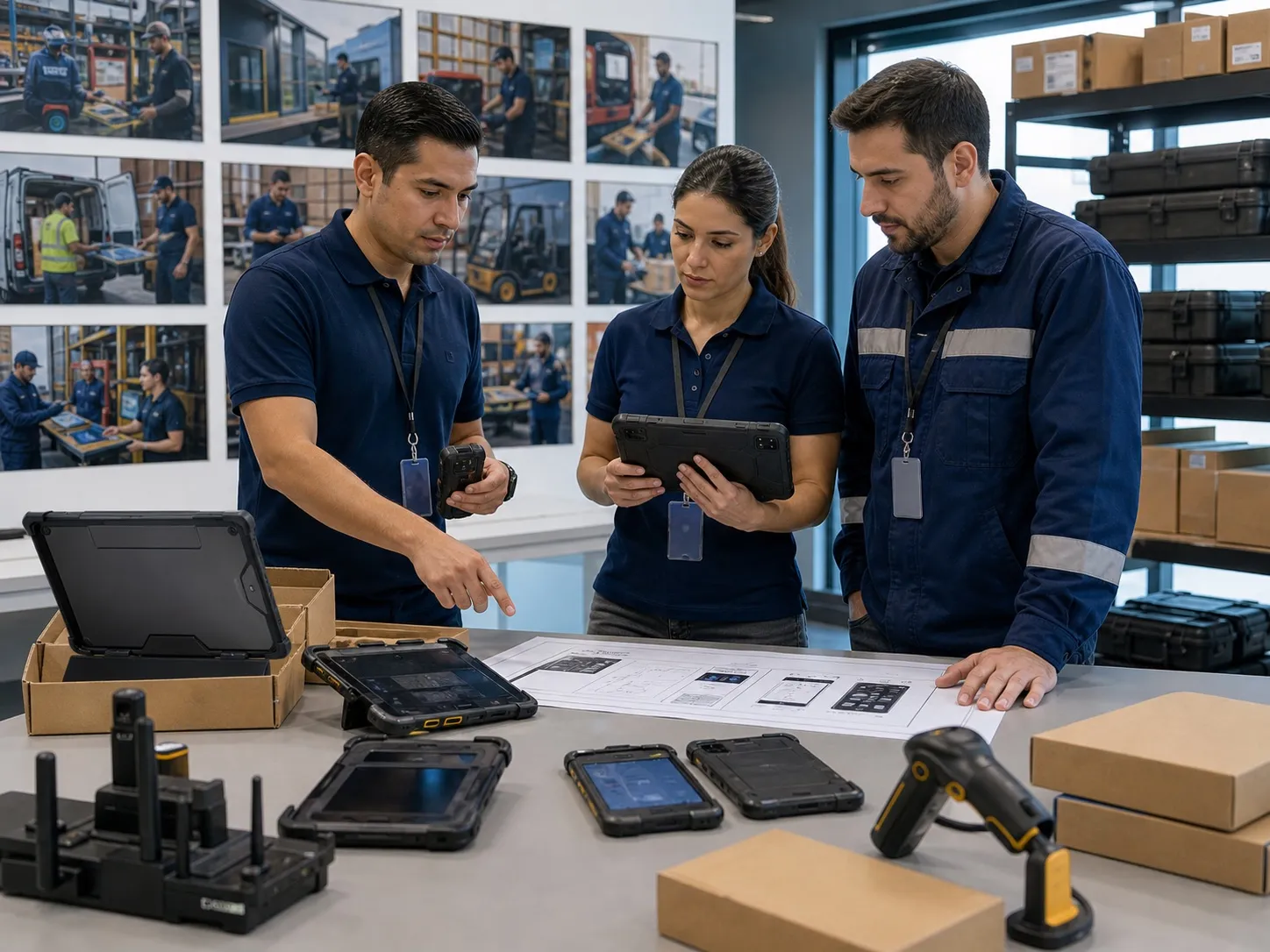
Manufacturing is only useful when the rollout is validated
A custom Android device manufacturer should not only quote a device shell or a logo print. The buyer needs a device batch that can run the app, follow the management policy, meet the target market constraints and arrive in a repeatable configuration. Vantora works as the device build layer for that requirement: we shortlist proven models, define the build spec, validate a sample against an acceptance matrix and stage the production batch with records before delivery.
Typical manufacturing paths and decision thresholds
The right path depends on customization depth. Light branding can stay close to a stock model. App preload and launcher work require software staging and acceptance. Management policy work depends on the selected MDM or EMM stack. Firmware or hardware changes need a deeper OEM review and longer validation. These ranges are planning ranges only; the project quote is confirmed after the device, target country, quantity band and build scope are reviewed. Build scope is the deciding variable among these paths, and the four customization levels behind it are set out in what is a custom Android device.
| Path | Typical quantity band | Typical sample window | Main dependency |
|---|---|---|---|
| Branding and packaging | 500-1,000+ units | 1-3 weeks | Artwork, model availability and packaging approval |
| App preload and launcher | 500-1,500+ units | 2-5 weeks | APK readiness, account flow and launcher policy |
| Managed or kiosk-ready build | 500-2,000+ units | 3-6 weeks | MDM/EMM enrollment method and restriction set |
| Firmware or hardware change | 2,000-5,000+ units | 6-12+ weeks | OEM support, engineering queue and target certification |
Brief to build spec
The first output is not a price sheet. It is a device build spec that translates the project brief into technical choices: screen size, ruggedness, scanner or NFC needs, GMS or AOSP direction, storage, RAM, radio bands, regional constraints, app preload, launcher behavior, management policy and packaging. The spec also records what is not included, so the project does not drift from a controlled device rollout into an open-ended customization request.
Sample validation before production
A production batch should not start until the sample proves the essential behavior. Vantora uses an acceptance matrix to test app launch, login, permissions, offline behavior, network behavior, update path, kiosk or launcher restrictions, factory reset behavior where applicable and packaging presentation. The sample release note records the device version, app version, policy version and known limitations so every review uses the same baseline.
Staged production batch
The production run is staged against the accepted sample. Typical staging records include IMEI or serial ranges, firmware version, app package version, policy package, labels, accessories, language, packaging and carton notes. This is the difference between buying devices and receiving a rollout-ready batch: the batch can be checked against a known configuration instead of reconstructed after delivery.
Where Vantora fits between OEM, MDM and app team
Vantora does not replace the OEM, the MDM vendor or the customer app team. We integrate their dependencies into one build plan. The OEM confirms hardware and platform capability. The MDM or management stack defines policy delivery. The app team owns the application behavior. Vantora owns the device build layer that turns these inputs into a validated sample and a staged device batch.
| Area | Primary owner | Vantora role |
|---|---|---|
| Hardware platform | OEM or device manufacturer | Shortlist viable models and confirm dependency risks |
| Application behavior | Customer app team | Preload, test install flow and document app-device issues |
| Management policy | MDM/EMM or management stack | Map policy to device behavior and staging steps |
| Acceptance testing | Customer plus Vantora | Run the sample matrix and record pass/fail results |
| Batch staging | Vantora with production partner | Prepare, label, kit and record the accepted configuration |
When this is not the right path
If there is no app, no workflow, no management requirement and no rollout plan, a standard wholesale purchase is usually a better fit. Vantora is built for projects where the device must arrive configured, tested and ready for controlled field use, not for one-off consumer phone sourcing or cosmetic-only decoration.
FAQ
What is the MOQ for custom Android device manufacturing?
The planning range depends on customization depth. Branding can start in lower hundreds on suitable stock models, while app preload, management policy and firmware-level work usually require higher bands. Vantora confirms the exact MOQ after model, target country and build scope review.
Can Vantora manufacture phones from scratch?
No. Vantora is not a from-scratch phone design house. We build validated rollouts on proven Android phones and tablets, then define the app, policy, branding, staging and acceptance layers needed for the deployment.
Do you support both phones and tablets?
Yes. The same build discipline applies to phones, tablets, rugged handhelds and dedicated devices, subject to the selected model, OEM support and target-market requirements.
Can certification be included?
Certification support can be scoped for the target market, but approvals depend on the model, country, test body and documentation. Vantora can coordinate the device build inputs and records needed for that process without claiming approval before evidence exists.
What do we receive before production?
The expected pre-production package is a build spec, a validated sample, an acceptance matrix, a sample release note and a production staging plan. The exact packet is agreed during the brief review.
Tell us your workflow and rules.
We turn requirements into deployment-ready devices.