Rugged Android Phones for Validated Field Rollouts
IP-rated Android phones prepared for field teams with app-ready builds, policy control, sample acceptance and batch staging before rollout.
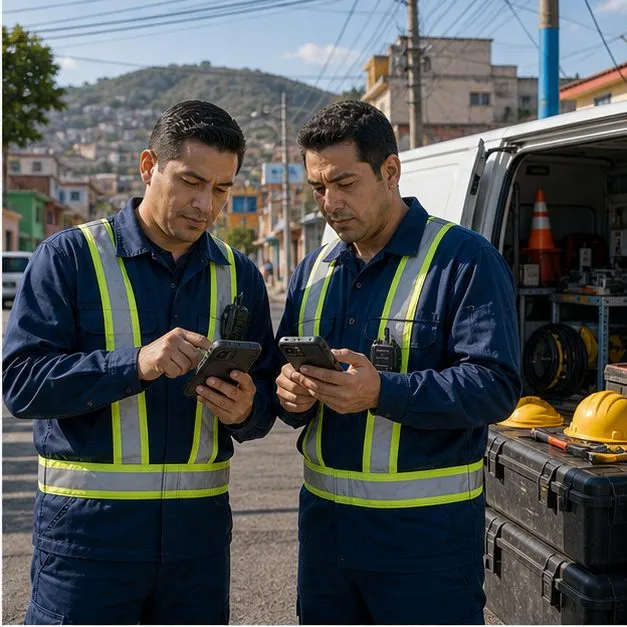
Brief: define the field conditions before selecting a rugged phone
A rugged phone is not automatically right for every field program, and the wrong one becomes a process failure long before it becomes a hardware failure. Whether the answer is a purpose-built rugged model or a mainstream handset in a protective case is a real fork, and the evaluation protocol for the latter is in mainstream Android phone as a controlled project device. The useful brief describes who carries the device, how long a shift lasts, whether gloves or rain are normal, what happens after a drop, whether PTT or SOS keys matter, which app is mission-critical, how the device must be controlled, and which countries and carriers it must work with. It also states the uncomfortable details: does the phone live in a pocket, a holster or a van door bin; is it shared between shifts or assigned to one worker; who replaces it when it breaks and how fast. Vantora uses that brief to shortlist proven Android rugged phone platforms instead of forcing a generic model into a deployment it cannot support, and turns each requirement into a testable row in the acceptance matrix so the sample either proves the fit or fails early.
- Carrier and region plan: bands, SIM strategy, roaming and local charger rules
- Shift profile: hours, charging windows, spare or hot-swap expectations
- Physical exposure: rain, dust, drops onto concrete, chemicals, wash-down
- Controls: PTT, SOS, programmable keys, glove and wet-touch operation
- Management: MDM/EMM enrollment, kiosk or dedicated mode, allowlist policy
Typical rugged phone specification ranges
Rugged Android phones sit in recognizable specification bands, and knowing the bands keeps device selection honest. The ranges below are typical across the market: they are planning inputs rather than a datasheet, and every value is subject to the specific model, OEM test method and project validation. Headline numbers also interact — a larger battery adds weight, a brighter screen shortens runtime, a sealed body changes speaker loudness — so Vantora reads the table as a set of trade-offs to validate against your workflow, not a shopping list of maximums. During feasibility review these bands are narrowed to the exact figures of the shortlisted models and re-confirmed on the accepted sample.
| Specification | Typical range | Validation note |
|---|---|---|
| Ingress protection | IP65–IP68 (typical) | Sealing depends on port covers, speaker membranes and the exact revision; confirm with the planned case, holster and charging path. |
| Drop specification | 1.2–1.8 m onto hard surface, per OEM test method (typical) | OEM lab methods differ; re-validate with the real case and screen protector, since accessories change drop behavior. |
| Battery capacity | 5,000–11,000 mAh (typical) | Shift runtime depends on screen, radios and app load; larger packs add weight and thickness that affect pocket and holster fit. |
| Display brightness | 400–700 nit typical; higher on selected outdoor models | Readability also depends on coating and auto-brightness behavior; validate in real field light. |
| Display size | 5.5–6.8 in (typical) | One-hand use, glove touch and the field app layout decide the right size more than preference does. |
| Operating temperature | −20 °C to +55 °C (typical) | Charging temperature limits are often narrower than operating limits; confirm for cold-chain and hot-cab scenarios. |
Build: configure hardware, apps and field controls together
The build layer can include branding, boot screen, app preload, custom launcher, programmable keys, PTT or SOS behavior, Wi-Fi or APN profiles, MDM enrollment and kiosk or dedicated mode. Available rugged configurations may include IP-rated housings, drop-resistant bodies, larger batteries, dual SIM, GNSS, bright outdoor displays and accessory paths such as charging docks. Hardware and software are scoped as one build because they fail together: a programmable key is only useful if the PTT app binds to it reliably, a big battery only matters if the charging dock fits the case, and an allowlist only holds if the launcher and reset posture back it up. The whole configuration — model, firmware, app package versions, key mapping, policy profile and accessories — is defined once and validated as a unit on the sample.
| Requirement | Typical check | Why it matters |
|---|---|---|
| Ingress and drop exposure | IP rating, housing, screen protection and accessory fit | The phone must survive the real environment, not just a brochure condition. |
| Shift runtime | Battery size, charging path and hot-swap or spare strategy | A field device that dies mid-shift becomes a process failure. |
| Field communication | PTT, SOS, dual SIM, GNSS and speaker behavior | Buttons and radios need to match the workflow and region. |
| Policy control | Launcher, allowlist, restricted settings and reset behavior | The rugged shell still needs a controlled Android experience. |
Controlled-use scenarios: what a policy-controlled rugged phone looks like
Most rugged phone programs are also controlled-use programs: the device is a work tool, and the build keeps it that way. Policy-controlled behavior — allowlists, restricted settings, launcher control, managed updates — is configured through the MDM/EMM path or OEM mechanisms supported by the selected model, and every control is written as an acceptance row so the locked behavior is tested rather than assumed. The scenarios below are the patterns Vantora scopes most often; each maps to a different depth of restriction, and a single fleet can mix them by role. What a control can and cannot do remains OEM- and platform-dependent, so the exact mechanism is confirmed per model during validation.
- Single-app delivery phone: kiosk or dedicated mode locked to the POD app, with camera and GNSS permitted for evidence capture and everything else hidden
- Multi-app inspection phone: a small allowlist of forms, camera, maps and messaging, with a controlled launcher and restricted settings
- PTT-first communication device: programmable key bound to the PTT app, volume and interruption policy tuned for noisy sites
- Lone-worker phone: SOS key wired to the escalation app, location reporting policy agreed with the workforce and documented
- Shared shift device: multi-user or check-in flow, cleared session state between shifts and asset labels tied to the staging record
Proof-of-delivery and inspection-round workflows
Two workflows dominate rugged phone briefs. The first is proof of delivery: scan the parcel or serial, capture a photo, take a signature or code, and sync — with an offline queue for basements and rural routes so the record is safe before coverage returns. The second is the inspection or patrol round: a checklist per site or asset, photo evidence, a GNSS-stamped record and deferred sync at the end of the loop. Both push the same device requirements — reliable scanning by camera or dedicated scanner, dependable camera behavior under policy, honest battery through a full route, and a locked app surface the workforce cannot wander out of. The proof of delivery devices use case page covers the POD workflow in depth, and the field inspection tablets page covers dense-form inspection where a larger screen wins; this device page defines how the phone hardware, keys, radios and policy build are validated to carry those workflows.
Validate: test the approved sample against the field workflow
The accepted sample should prove the phone can run the required app, maintain connectivity assumptions, follow policy controls and support the expected accessories. Vantora validates app compatibility, PTT or SOS behavior when required, scan or camera behavior when relevant, MDM enrollment, reset posture and region-specific band assumptions. Certification documents such as CE or FCC are model- and market-dependent and must be mapped to the exact device variant. Validation is a documented pass through agreed acceptance rows — condition, expected behavior, observed result — and typically takes two to four weeks depending on how much of the field workflow must be reproduced, subject to project scope. The output is a sample version record naming the model, firmware, app package versions, key mapping, policy profile and accessory list; that record is the baseline every batch is checked against.
- Field app, permission and offline-queue validation against the real workflow
- Battery and charging behavior measured under the actual app load, not idle
- GNSS, SIM, APN and network assumption checks for each target region
- PTT, SOS and programmable-key behavior under the planned app bindings
- Kiosk or dedicated-mode behavior, reset posture and recovery path review
- Accessory, holster, dock and packaging fit checks with the final case
Stage: prepare rugged phones as a repeatable batch
Batch staging turns the accepted sample into a repeatable delivery. Each unit is brought to the recorded build state — app preload, enrollment state, network profiles, key mapping — then labeled, recorded and packed so the receiving team deploys without per-device improvisation. Staging records can include device naming, asset labels, IMEI or serial ranges mapped to cartons and destinations, charging dock packing, spare-battery notes and field handoff instructions. Delivery is typically staged in tranches: a pilot batch of roughly 20–100 units first, subject to project scope, then volume tranches verified against the same staging record, so any drift between sample and production surfaces early and cheaply. For partner-led projects, the same build can be delivered in a neutral or white-label flow so the system integrator or app company keeps the end-customer relationship, with the delivery boundary written into the responsibility matrix.
- Per-unit build state applied and spot-checked against the sample version record
- IMEI/serial records mapped to labels, cartons and delivery destinations
- Pilot tranche first; volume tranches released against the same record
- Neutral or white-label packaging and documentation for partner programs
Rollout: keep the pilot and production batch aligned
A rugged phone rollout fails when the production batch drifts from the sample. Vantora records the sample version, accepted model assumptions, policy settings, app package version, accessory requirements and known limitations so re-orders can be checked against the same baseline. When something must change mid-program — an OEM firmware update, a new app release, a revised case — the change is validated against the acceptance matrix before it enters a batch, and the known-limitations list is updated so field support is never surprised. Re-orders reference the sample version record by name, which keeps a multi-year fleet on one defined build instead of a slowly diverging family of similar phones.
A sample-stage checklist for battery, radios, controls, accessories and app behavior.
A batch handoff matrix for labels, records, packaging, accessories and provisioning.
FAQ
How rugged can the phones be?
Ruggedness is model-dependent. Typical market bands run IP65–IP68 for ingress and roughly 1.2–1.8 m drop per OEM test method, subject to model and validation. Vantora shortlists phones in the band your environment demands and validates the accepted sample against the field conditions in your brief.
What battery capacity should we plan for a full shift?
Typical rugged phone batteries run 5,000–11,000 mAh, but runtime depends on screen brightness, radios and the real app load, so Vantora measures runtime against your workflow during validation and scopes charging docks, spares or larger packs where the shift requires it, subject to model support.
Can rugged phones support push-to-talk or SOS keys?
Yes, on suitable models. PTT, SOS, programmable keys, dual SIM and GNSS are checked during device selection, and the key-to-app bindings are validated on the sample so the button behavior in the field matches what the workflow assumes.
Can the phones be locked to our field app?
Yes, when the selected model and management path support it. Vantora scopes kiosk or dedicated mode, app allowlists, launcher behavior and restricted settings, and writes each control into the acceptance matrix so the locked behavior is tested rather than assumed.
Are these phones suitable for proof-of-delivery workflows?
Yes — POD is one of the most common rugged phone deployments. Scan, photo, signature and offline-queue behavior are validated against your POD app on the sample, and the proof of delivery devices use case page covers the workflow side in detail.
Can the devices ship already configured?
Yes. Batch staging can cover app preload, enrollment state, asset labels, IMEI records, accessory packing and handoff instructions before delivery, with a pilot tranche released first and volume tranches verified against the same staging record.
Can we use the same rugged phone in multiple countries?
Sometimes. Region fit depends on radio bands, SIM requirements, charger rules, certification path and available device variants, so it must be validated per target market and mapped to the exact device variant before the batch plan is fixed.
Tell us your workflow and rules.
We turn requirements into deployment-ready devices.