Field Service Mobile Devices for Validated Technician Rollouts
Rugged Android phones, tablets and handhelds prepared for work orders, inspection, meter reading and GIS workflows with app-ready setup, offline validation and batch staging.
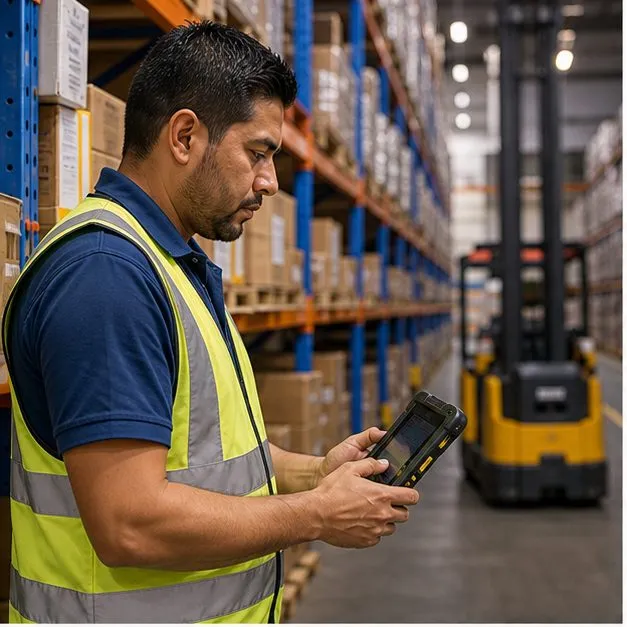
Brief: define the technician workflow and field conditions
Field service devices must survive distance from support. The brief should define work-order app, GIS or map use, photo capture, meter reading method, barcode or NFC requirements, offline zones, GNSS accuracy needs, PTT or SOS assumptions, shift length, sunlight readability, gloves, weather, SIM/APN, charging and management policy. Vantora uses that brief to select rugged phones, tablets or handhelds and the acceptance checks they must pass. The handset side is detailed in rugged phones, and inspection record capture is scoped separately in field inspection tablets.
Build: prepare field apps, radios and controls together
The build layer can include app preload, field-form permissions, offline sync assumptions, GNSS and map behavior, camera permissions, NFC or barcode path, PTT or SOS key behavior, MDM enrollment, kiosk posture, APN profiles, asset labels, chargers, mounts and packaging. Available device paths may include rugged phones for technicians, rugged tablets for inspection and GIS, and handhelds for meter reading or parts tracking.
| Workflow | Device path | Acceptance check |
|---|---|---|
| Work orders | Rugged phone with job app, camera and offline sync | Job flow, photo capture, sync recovery and battery behavior reviewed. |
| Inspection and GIS | Rugged tablet with high-brightness screen, GNSS and maps | Display readability, location behavior and form workflow validated. |
| Meter reading | Handheld or rugged phone with barcode, NFC or camera path | Read method, data entry, offline capture and policy state checked. |
| Technician communication | Rugged phone with dual SIM, PTT or SOS where supported | Button behavior, SIM/APN and location assumptions documented. |
Validate: test field capture and offline behavior
A field sample should be tested with the real app, forms, location behavior, photo capture and connectivity assumptions. Vantora validates offline capture, sync recovery, app permissions, GNSS, camera, barcode or NFC path, MDM enrollment, kiosk posture, screen readability, charger plan and known limitations before batch approval.
- Work-order, inspection or meter-reading app validation
- Offline capture and deferred sync review
- GNSS, camera, barcode or NFC behavior check
- Battery, charger and field accessory review
- Policy state and reset behavior validation
Stage: prepare devices by crew, region or job type
Field teams are often distributed by crew, region, contract or job type. Batch staging can include app state, APN profiles, labels, serial records, chargers, mounts, role profiles and handoff notes. This keeps each field team from receiving a generic phone that still needs manual setup.
Rollout: preserve the accepted field build
The accepted rollout record captures the selected model, app version, offline behavior, GNSS assumptions, policy path, accessory pack, labels and known limitations. Future batches can be checked against the same field-ready baseline before they reach technicians.
Validation matrix for work orders, photos, GIS, meter reading, offline sync and policy controls.
Checklist for role profiles, APN, labels, chargers, mounts and handoff notes.
FAQ
Can field service devices work offline?
Yes, when the field app supports it. Vantora validates offline forms, photos and deferred sync behavior before batch approval.
Should technicians use rugged phones or rugged tablets?
Phones fit communication and compact work-order flows; tablets fit maps, inspection forms and larger screens. The brief decides which device path to validate.
Can devices support meter reading?
Yes. Barcode, NFC, camera or manual entry paths can be scoped and tested against the meter-reading workflow.
Can devices be staged by crew or region?
Yes. Batch staging can group devices by crew, region or job type with app state, APN profiles, labels, chargers and handoff notes.
Can PTT or SOS keys be included?
On suitable rugged phone models, PTT, SOS, dual SIM and location assumptions can be included in the feasibility review and sample validation.
Tell us your workflow and rules.
We turn requirements into deployment-ready devices.