GMS vs AOSP Enterprise Devices: A Rollout Decision Guide
Choose the platform-service path your application and market require, then validate management, provisioning, updates and recovery on the exact device build before approving a rollout.
- Published
- Updated
The Decision Is Two-Dimensional
Start with an exact, Play Protect-certified GMS candidate when the application or rollout depends on Google Play services, managed Google Play, Google zero-touch or the standard Google-backed Android Enterprise path. Then verify that service and enrollment eligibility on the target SKU and build. For a real-time communications application, use the Android WebRTC hardware selection guide to keep the platform-service decision tied to the camera, codec, audio, network and sustained-call evidence it must support. Consider non-GMS AOSP only when those dependencies are absent or replaceable and distribution, management, signing, OTA, maintenance, recovery and lifecycle ownership are assigned and validated.
Six Published Facts Behind the Choice
These sources establish useful platform boundaries. They do not turn a model family, a logo or a supplier statement into acceptance evidence for a particular project.
| Verified fact | What it establishes | What it does not establish | Buyer or acceptance action |
|---|---|---|---|
| AOSP is public source code for Android variants; GMS is a separately licensed Google app and API layer that is not part of AOSP. | Platform source and Google services are separate decisions. | That an AOSP build is maintained or a quoted GMS build is licensed. | Record the exact build and its Play Protect and GMS evidence. |
| Google Play services SDK clients call the installed Google Play services application at runtime. | APK installation alone is not a dependency audit. | Which SDKs the production app uses or its failure behavior. | Test missing, disabled, outdated, restricted and offline states. |
| Google describes an Android Enterprise solution as an EMM console, Android Device Policy and managed Google Play. | The standard Google-backed path has named components. | That every EMM exposes every control or that the same stack exists on a non-GMS build. | Freeze the exact EMM, management mode, app channel, policy and build. |
| AOSP documents managed provisioning framework flows and DPC responsibilities. | A non-GMS build can implement Android management foundations. | A complete, secure, maintained or accepted production route on a specific build. | Require Setup Wizard or DPC evidence, app distribution, reset, recovery and owners. |
| Google zero-touch enrollment requires eligible devices, GMS with Play services enabled, a supporting EMM, an authorized reseller-created account, an assigned configuration and setup connectivity. | Zero-touch is a specific supply-chain and service path. | That a model family, reseller quote or portal account covers the exact units. | Verify identifiers, assignment, configuration, network, clean first boot and recovery. |
| Android compatibility requires the applicable CDD and CTS, while released images and OTA packages depend on controlled signing keys. | Compatibility and release authority are testable evidence categories. | GMS licensing, update duration, market approval or customer-workflow acceptance. | Contract compatibility, licensing, signing, update, recovery and acceptance evidence separately. |
Platform Services and Device Management Are Separate Decisions
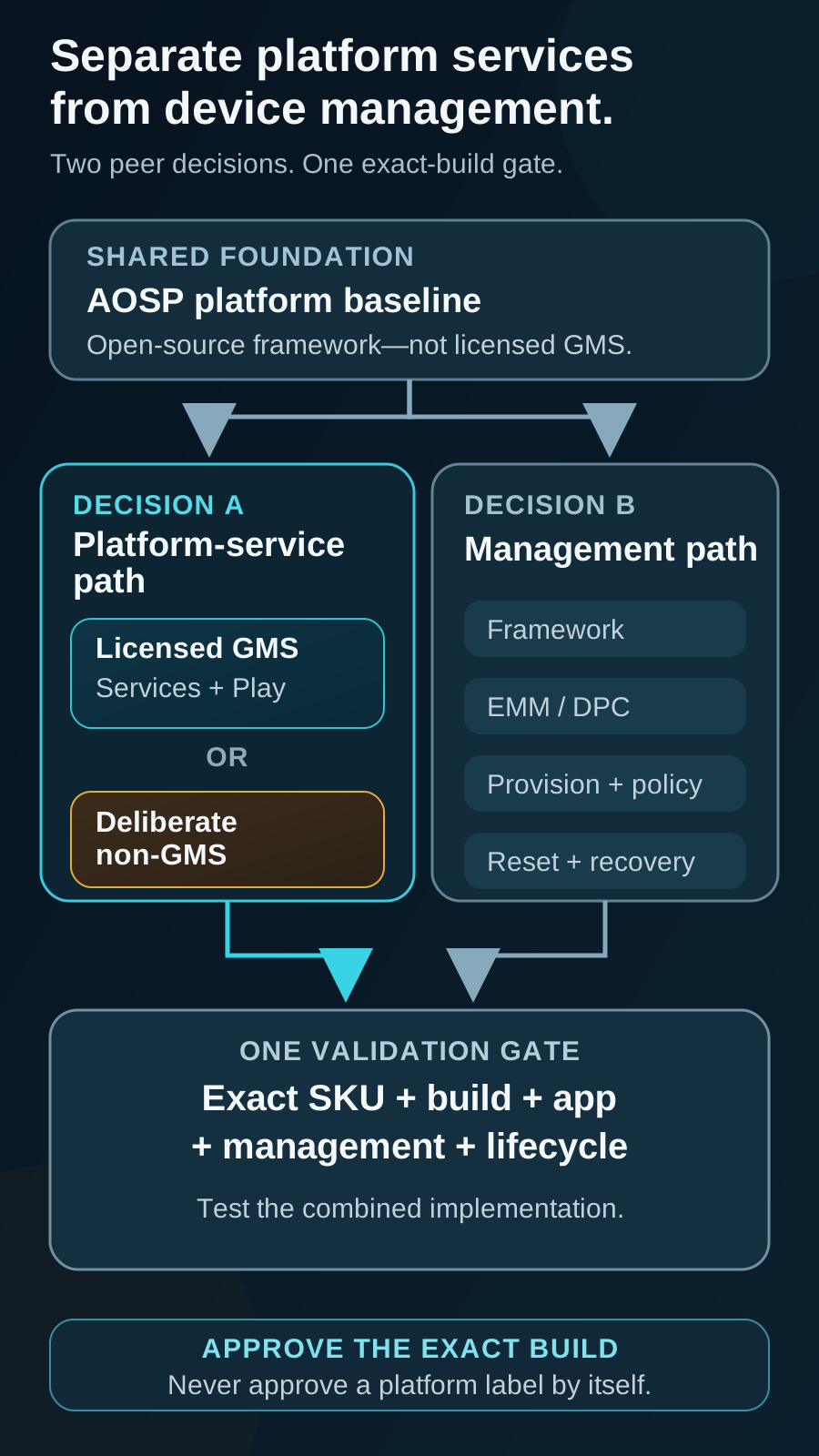
Choose the platform-service path required by the application and market, then validate the management, provisioning, update and recovery implementation on the exact build. Neither GMS nor AOSP alone proves zero-touch, EMM support, update terms, offline behavior, security or QR provisioning.
GMS vs AOSP Enterprise Device Comparison
Here, the GMS route means a licensed, Play Protect-certified production build. The AOSP route means a deliberately scoped production build without the licensed GMS layer.
| Decision dimension | Licensed GMS route | Non-GMS AOSP route | Evidence before approval |
|---|---|---|---|
| App runtime | Provides the Google Play services APIs present on the exact certified build. | Google-dependent functions must be absent, replaced or designed to fail safely. | Dependency inventory plus end-to-end application tests. |
| App distribution | Can use managed Google Play when the management architecture supports it. | Requires a project-defined distribution and update channel with named owners. | Clean install, update, rollback, signature and offline results. |
| Enterprise management | Can use supported Google-backed Android Enterprise and EMM paths. | Requires a verified framework, DPC or agent, policy, app channel and support path. | Exact ownership mode, management component, policy and device/build results. |
| Provisioning | Uses the management-state-specific methods supported by the exact Google-backed route. | Requires a verified AOSP managed-provisioning or other project-defined implementation. | Repeatable enrollment from the intended clean state. |
| Platform evidence | Play Protect certification, exact model/SKU/build, GMS status and applicable EMM support. | Build identity, component list, app and management route, signing owner and release baseline. | Recorded artifacts, not a logo or supplier statement alone. |
| System control | Limited by the certified OEM build, public APIs, supported OEM features and license conditions. | May be deeper only when the project has viable OEM/BSP, privilege and signing access. | Authorized implementation path and testable requirement. |
| OS lifecycle | The OEM or platform owner still controls firmware releases and support terms. | A named build owner must integrate, sign, test, distribute and support releases. | Patch policy, release owner, OTA path, recovery and end-of-support record. |
| Reset and recovery | Re-enrollment and app/policy restoration still require validation. | Reset behavior and restoration may be entirely project-specific. | Factory-reset, re-enrollment, failed-update and recovery tests. |
Audit the Application Before Selecting Hardware
Do not select the platform from “works on Android.” Audit the actual application, SDKs, identity flow, updates and failure behavior. Google explains that Play services SDKs communicate with the installed Play services application, so devices without it do not provide that runtime. Test the production application when services are current, unavailable, disabled, outdated, restricted or offline. Record whether the application starts, authenticates, completes work, synchronizes and fails recoverably.
- Inventory Play services, push, Maps, Google Sign-In, Play Integrity, Play licensing and other Google API dependencies.
- Treat application distribution as a separate dependency with named owners for signing, version targeting, release, updates and recovery.
- Use managed Google Play where the exact supported management architecture requires it; define a controlled alternative for a non-GMS build.
Where Android Enterprise Fits
Google describes the standard Google-backed Android Enterprise solution as an EMM console, Android Device Policy and managed Google Play. That path should not be generalized to every non-GMS build. At the same time, Android management foundations exist in AOSP: its managed-provisioning documentation covers device-owner and profile-owner use cases, including QR, NFC and cloud-initiated flows when the build, Setup Wizard and DPC provide the required behavior. AOSP is not inherently unmanaged or QR-incompatible; the production question is whether the exact OEM build and management component provide a complete, maintainable implementation.
- Treat zero-touch as a specific eligible-device, reseller, account, configuration, EMM and connectivity path—not a synonym for QR or device-owner provisioning.
- Choose the management state and validate the precise entry route using the Android device provisioning methods guide.
Use Exact Evidence for Compatibility and Licensing
Avoid treating “GMS certified” as a universal assurance. Google says Play Protect-certified devices have passed Android compatibility testing and can include proprietary Google apps under license. The Android Compatibility program uses the Compatibility Definition Document and CTS, but compatibility only makes a device eligible to pursue GMS licensing; it does not grant that license automatically.
- Record the model, regional SKU, build fingerprint, Play Protect status, Android version, patch level and applicable OEM or EMM listing.
- Do not infer licensing from a Play Store icon or supplier statement.
- Do not infer upgrade count, patch frequency, end-of-support terms or market approval from certification.
More Platform Control Creates More Lifecycle Ownership
AOSP source availability does not itself provide the board support package, vendor binaries, privileged permissions, release keys, OTA service, rollback design or maintainers. Deeper control can be justified for a required privileged component, specialized hardware, private ecosystem or unavailable policy, but the project must name the authorized implementation path and continuing owners. Scope Android firmware and software work by device, platform, requirement, MOQ, release path and feasibility rather than assuming access to every firmware branch.
Follow a Bounded Selection Path
Use a repeatable sequence that stops the project from treating a platform label as proof of rollout readiness.
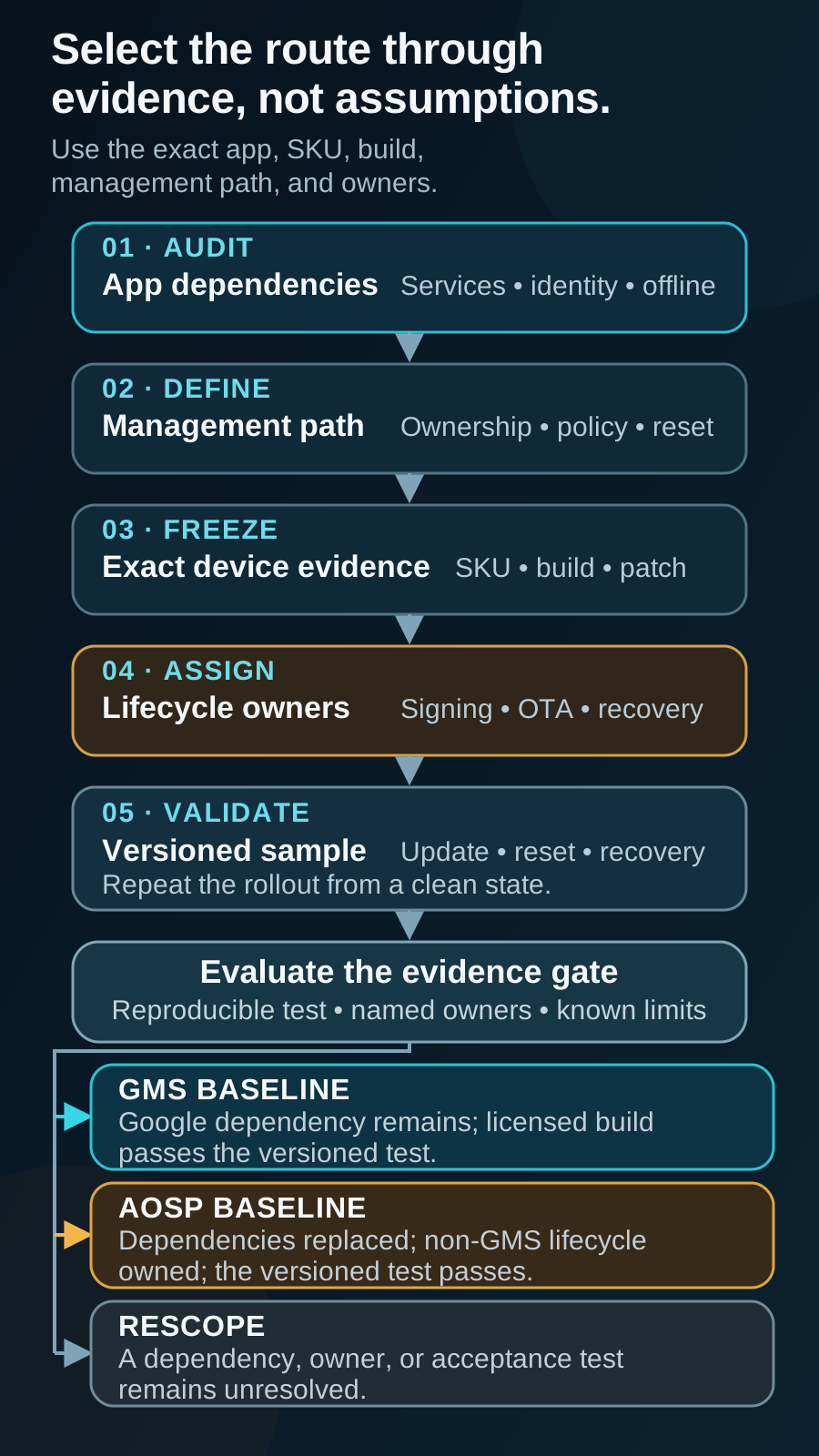
- 1Audit the application: Google APIs, identity, distribution, updates, offline behavior, peripherals and backend dependencies.
- 2Define management: ownership mode, EMM/DPC, policy, app channel, provisioning method and reset state.
- 3Freeze the candidate: exact model, regional SKU, Android/firmware build, GMS/Play Protect status and patch level.
- 4Assign owners: app and system signing, OTA, security fixes, rollback, support and end of life.
- 5Test the sample: workflow, enrollment, policy, updates, offline state, reboot, reset and recovery.
- 6Decide: accept the evidenced baseline, change route or rescope before batch staging.
Require Evidence Before Sample Approval
Sample approval should describe a reproducible system, not merely a device that booted once. Vantora can coordinate device selection, application and management validation, provisioning, QA and delivery; the application team owns application behavior, the EMM provider owns its supported implementation, the OEM or authorized build owner controls firmware and signing, and the customer or integration partner approves risk and acceptance.
| Evidence category | What the sample record should show |
|---|---|
| Device baseline | Exact model, regional SKU, build fingerprint, Android/firmware version, patch level and component baseline. |
| Platform and application | Play Protect/GMS evidence for a GMS build or a non-GMS component/ownership record; first-run, permissions, identity, workflow, offline, installation and update results. |
| Management and recovery | EMM/DPC enrollment, policy, kiosk or restrictions, reporting, support access, factory reset, re-enrollment, replacement and recovery results. |
| Release responsibility | Named release and support owners, build specification, release note, acceptance record and known limitations. |
Request a Feasibility Review
Share a redacted brief with the intended device category, target market, quantity range, application status, Google-service dependencies, EMM, provisioning route, lifecycle expectations and acceptance priorities. End-customer names and commercial details are not required for an initial review. If the proposed hardware falls outside a conventional phone, tablet or handheld GMS path and a supplier introduces EDLA, use the EDLA vs GMS vs AOSP guide for that separate licensing and device-category question.
FAQ
Can an AOSP device still be managed?
Potentially. Android includes device-management and managed-provisioning frameworks, but the exact build must provide a working Setup Wizard, DPC or agent, ownership mode, policies, app distribution, connectivity, recovery and maintenance path. “AOSP” alone is not evidence of a complete management solution.
Can GMS be added after devices are produced?
Do not plan around that assumption. GMS is separately licensed, and the production build, model, OEM path, Android compatibility and Play Protect status must support it. Informally installing Google apps does not turn a non-GMS build into a properly licensed production device.
Does GMS guarantee Android Enterprise support and OS updates?
No. Confirm the intended management mode, EMM feature set, enrollment method, regional SKU and build. Separately verify the OEM’s Android-version, security-patch, firmware, recovery and end-of-support commitments.
Is AOSP always the better route for offline or highly controlled devices?
No. A GMS device may support an offline business workflow, while an AOSP build may still depend on networks and external services. Choose AOSP only when its dependency, control, lifecycle and commercial model are deliberately supported and proven.
Tell us your workflow and rules.
We turn requirements into deployment-ready devices.