White-Label Cell Phones in China: What B2B Buyers Need to Verify
A practical sourcing guide for separating white-label, white-box, OEM and ODM claims, then verifying the exact phone build, Android and Google status, TAC and IMEI ownership, market approvals, samples and batch controls.
- Published
- Updated
The short answer
White-label cell phones in China are usually existing handset platforms adapted for another company to sell or deploy under its own brand. That may include a logo, boot animation, preloaded app, packaging, accessories or a managed configuration. The label alone proves very little. Before buying, verify the contracting company, the exact hardware and firmware build, Android and Google status, TAC and IMEI responsibility, target-market approvals, battery records, support ownership and a reference sample that production must match.
Define the program before asking for quotes
A vague request such as “send your best white-label phone” invites quotes that cannot be compared. Start with the deployment outcome. A reseller bundle, an app-led service, an MVNO offer and a public-sector field program may all use a branded phone, but they create different software, network, compliance and support duties.
- Target countries, operators and required radio bands.
- Quantity bands for sample, pilot, first batch and forecast volume.
- Required branding on the device, boot flow, packaging, labels and accessories.
- App state, permissions, accounts, kiosk or MDM controls, offline behavior and update path.
- Commercial owner for warranty, spare units, repair, returns and field support.
- The person who can approve the reference sample and the tests they will use.
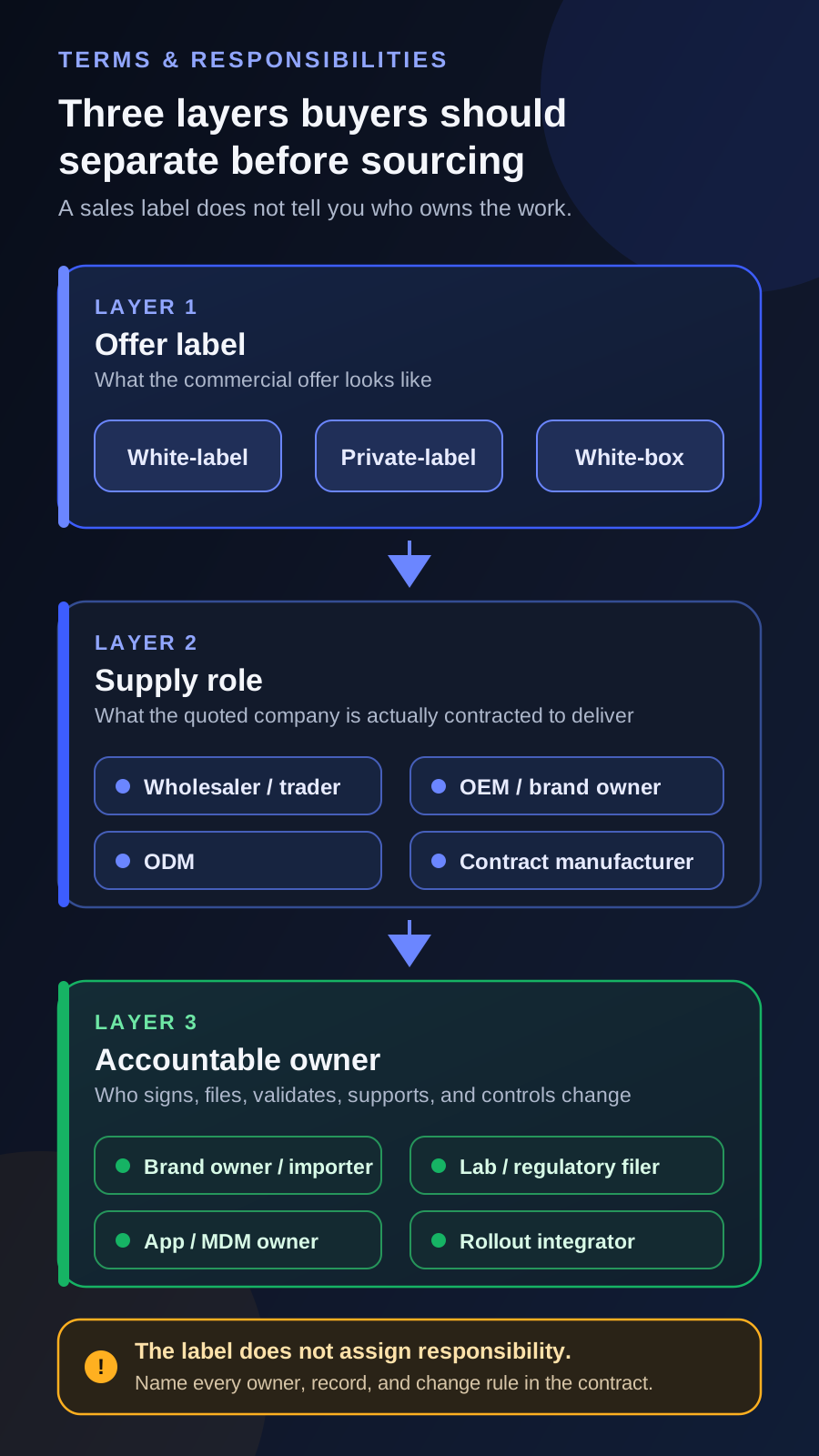
White-label, private-label, white-box, OEM and ODM are not the same thing
These terms are used loosely in supplier listings. Treat them as a prompt for questions, not as proof of capability. The Android ODM vs OEM guide explains the manufacturing roles in more detail. Historical industry writing also used “white-box” or “white-brand” for no-name phones; that does not automatically make every unbranded phone counterfeit, but origin, software rights and trademark use still need evidence.
| Term | What it usually describes | What still needs proof |
|---|---|---|
| White-label phone | An existing device offered to more than one buyer with limited branding or configuration. | Exact build, brand rights, software status, approvals and lifecycle. |
| Private-label phone | A product prepared for one buyer or channel under that buyer’s brand. | Exclusivity, tooling ownership, change control and regulatory responsibility. |
| White-box or white-brand phone | An older or informal term for a no-name or generic handset. | Legal origin, IP rights, firmware provenance and whether the seller controls production. |
| ODM | A company providing an existing platform and contracted design or manufacturing work. | Which engineering, approvals, software and support duties are inside the signed scope. |
| OEM | A brand or product owner, although suppliers use the term inconsistently. | Actual authority over the quoted model, firmware, lifecycle and warranty. |
| Counterfeit or shanzhai | A separate question involving copied identity, protected assets or misleading origin. | Trademark clearance, authorized software, lawful labeling and traceable supply. |
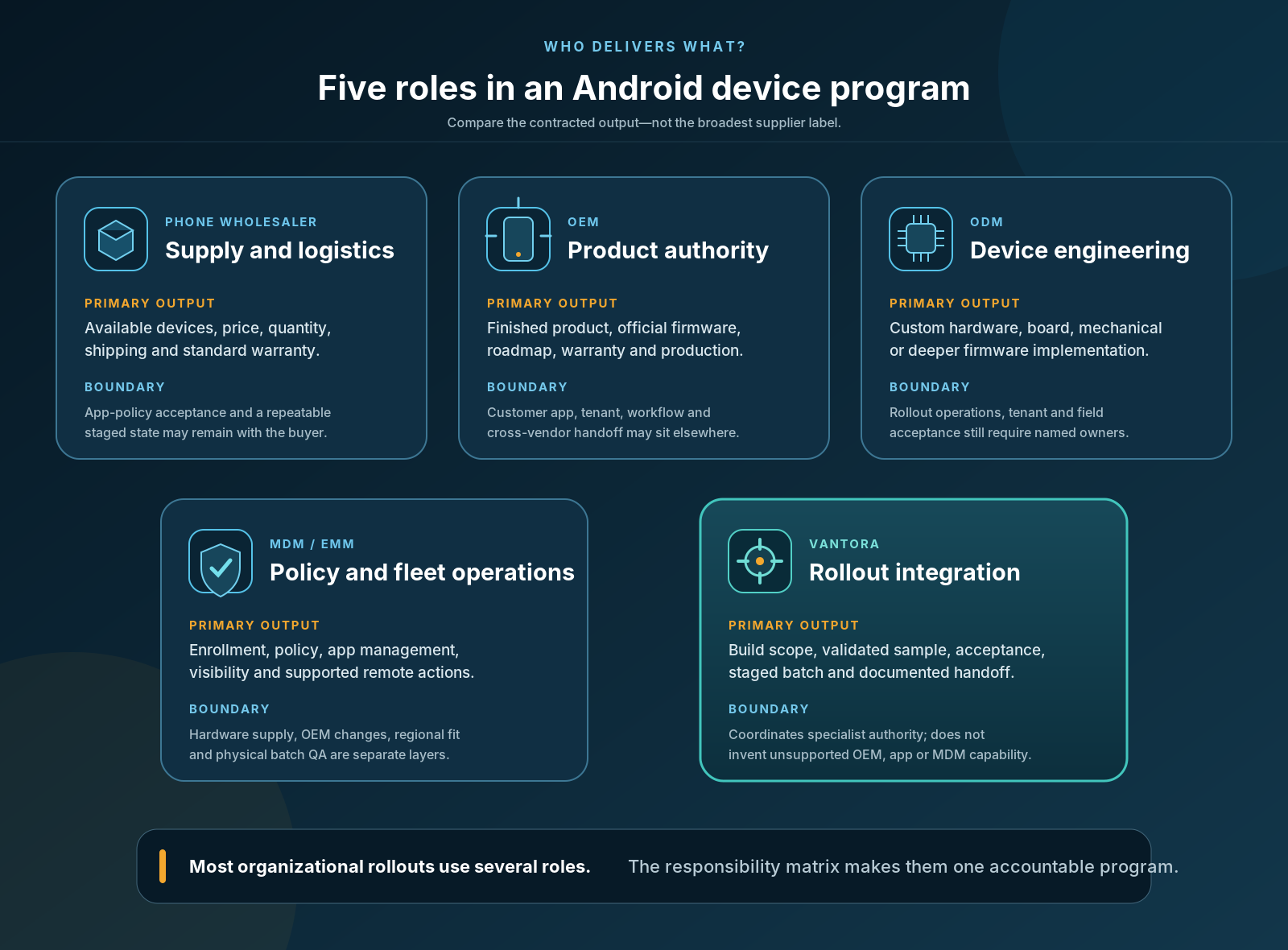
Choose the commercial route by the work you need done
A catalogue trader can be suitable for spot inventory. An ODM may be the right path for a stable platform that needs moderate adaptation. A rollout integrator is useful when the hard part is connecting the phone, app, policy, sample, batch and handoff. One company may perform several roles, so compare contracted outputs and evidence rather than job titles. The custom smartphone overview shows where branding, configuration and deeper engineering start to diverge.
| Route | Useful when | Main limitation to resolve |
|---|---|---|
| Marketplace or trader | You need available stock, samples or a small resale test. | The seller may not control the factory, firmware or approvals. |
| Wholesaler or distributor | You need known models, standard warranty and logistics. | Branding and build-level change control may be limited. |
| ODM program | A proven platform needs branding, software or moderate product adaptation. | Responsibilities for licensing, filings, app behavior and support must be written. |
| Deeper OEM project | The required hardware cannot be met by an existing platform. | Engineering cost, MOQ, timing and revalidation pressure rise quickly. |
| Rollout integrator | Several suppliers must deliver one accepted, app-ready and policy-controlled build. | OEM, carrier, importer and software authority remain with the named parties. |
Verify the company behind the quote
A polished marketplace page is not a legal identity. Ask for the company’s Chinese legal name, Unified Social Credit Identifier, registered address and the entity that will sign the contract. Check the record in China’s National Enterprise Credit Information Publicity System. Then make sure the quotation, contract, commercial invoice and bank beneficiary tell a consistent story. Registry data confirms that an entity exists; it does not prove that it owns a factory or controls the quoted phone.
- Request a live video walkthrough or independent audit when factory capability matters to the deal.
- Ask which work is performed by the seller, an affiliated company, the ODM, the assembly plant and outside labs.
- Confirm who owns the product tooling, firmware branch, signing keys, test reports and warranty process.
- Pause if payment is redirected to an unexplained person or unrelated entity.
Freeze the exact build, not a catalogue description
A model name is not enough. Two phones sold under the same marketing name can differ by region, memory, camera, radio, battery, display supplier or firmware. Put the accepted values into a controlled device build spec, attach source records and define which changes require approval. “Equivalent components may be used” is not a safe change rule unless the equivalence test and approval owner are named.
| Build area | Record to request | Why buyers need it |
|---|---|---|
| Product identity | Manufacturer, model, regional SKU, hardware revision and brand owner. | Links the commercial offer to reports, firmware and labels. |
| Hardware | SoC, RAM, storage, display, cameras, battery, NFC, sensors and accessories. | Prevents silent substitutions that change app or field behavior. |
| Radio | Supported LTE or 5G bands, SIM format, eSIM state, VoLTE assumptions and operator target. | A global-looking spec does not prove network fit. |
| Software | Android version, security patch, build fingerprint, preload list and update path. | Ties test results to the software that ships. |
| Packaging | Box, labels, manuals, charger, cable, language and serialization fields. | Branding and market obligations extend beyond the handset. |
| Change control | Allowed substitutions, notice period, re-test trigger and approval authority. | Keeps the production batch aligned with the accepted sample. |
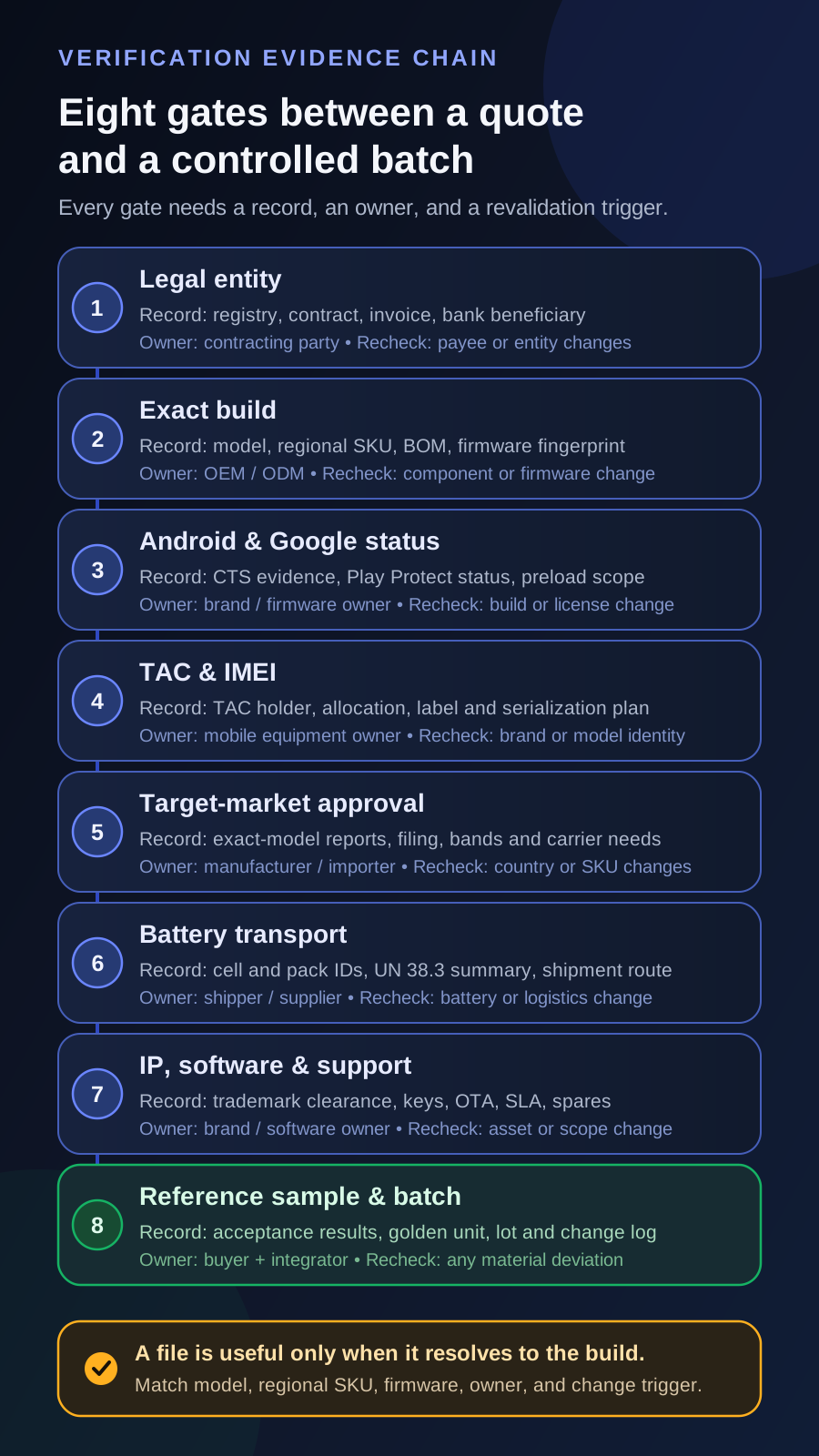
Build an evidence chain that survives supplier claims
A certificate folder is not the same as an approved build. Each record should identify the applicable model or configuration, the party responsible for it and the event that makes it stale. If the quoted phone changes regional SKU, radio module, battery, enclosure, brand identity or firmware, ask which tests, filings and acceptance results must be repeated.
Android compatibility and Google services are separate checks
Access to Android source code does not automatically authorize a supplier to ship Google’s proprietary apps. Google explains that Play Protect certified devices are tested for security and performance and are licensed to include Google apps. The Android Open Source Project separately documents the compatibility program and CTS. Ask for evidence tied to the exact commercial build, then check the sample itself. The GMS vs AOSP guide covers the deployment tradeoffs.
| Question | Evidence to request | Do not assume |
|---|---|---|
| Does the device run an Android-based build? | OS version, build fingerprint, source and firmware owner. | That it is compatible, secure or licensed for Google apps. |
| Does the build meet Android compatibility requirements? | AOSP compatibility records and relevant test results. | That Google Play or proprietary Google apps are included. |
| Is Google Play expected on the shipping build? | Play Protect certification status for the device and sample behavior. | That a screenshot or demo unit proves production authorization. |
Name the TAC and IMEI owner before production
IMEI is not a number range to borrow casually. The GSMA assigns Type Allocation Codes through its official process and defines the Mobile Equipment Owner in the TAC Allocation Terms. In a private-label program, clarify whose brand and model identity appears in the GSMA record, who holds the TAC, who generates the IMEIs, how duplicates are prevented and how device, carton and shipment records reconcile. A supplier saying “IMEI included” has not answered those questions.
- Record the TAC holder and the brand/model identity associated with the allocation.
- Define who generates, applies, checks and retains the handset and carton serial records.
- Reconcile sample IMEIs before approving labels or packaging.
- Treat a brand, model or hardware identity change as a TAC review trigger.
Match approvals to the exact market and configuration
A document with a familiar logo is useful only if it applies to the phone you will import and sell. Compare applicant, manufacturer, model, hardware revision, radio bands, accessories, battery and firmware notes. For EU projects, the Radio Equipment Directive defines manufacturer and importer duties, including situations where a product is marketed under a company’s own name or trademark. For US projects, use the FCC Equipment Authorization search to inspect the applicable record. Carrier or industry programs such as PTCRB may add another gate when the operator or market requires it.
| Scope | Question to answer | Typical evidence |
|---|---|---|
| Country regulation | Who is manufacturer or importer of record, and which route applies? | Official filing, declaration, test reports and traceable model identity. |
| Radio configuration | Do the tested bands and antennas match the shipping SKU? | Grant or report details compared with the build spec. |
| Carrier acceptance | Does the target operator require lab, industry or its own testing? | Written carrier requirements and applicable acceptance record. |
| Private-label branding | Does the new brand or model name change filing or labeling duties? | Advice from the responsible lab or regulatory owner, recorded in the project file. |
Treat the battery as part of the product record
A phone battery affects safety testing, shipping and replacement support. Match the cell and pack identifiers in the sample, build spec, safety file and logistics paperwork. Ask for the applicable UN 38.3 test summary and confirm who is responsible for the shipment. The US Pipeline and Hazardous Materials Safety Administration keeps current lithium battery transportation guidance. A battery substitution can invalidate more than runtime testing, so it belongs in change control.
- Cell manufacturer and model.
- Pack assembler, pack model, rated capacity and protective circuit.
- Applicable safety and transport records.
- Packaging method, state-of-charge limits and air or sea shipment route.
- Replacement-battery source and end-of-life plan.
Write software ownership and support into the deal
Logo placement is visible; firmware responsibility is not. Before signing, identify the party that owns or controls the shipping branch, signing keys, preload pipeline, update server and recovery image. Then set an update and support boundary that fits the deployment. “OTA supported” can mean anything from a one-time factory update to a maintained service, so ask for the mechanism, release authority, service period and failure-recovery process.
| Area | Decision to record | Acceptance evidence |
|---|---|---|
| Firmware branch | Who can build, sign and release it? | Build fingerprint, version record and signed sample. |
| Preloaded apps | Package, version, configuration, permissions and update source. | Install record plus first-run, update and rollback tests. |
| OTA | Server, signing authority, cadence, approval gate and recovery path. | Controlled update test on the reference sample. |
| Security maintenance | Patch commitment, exclusions and end date. | Written support window and escalation route. |
| Warranty and spares | DOA rule, repair route, spare ratio, parts and data handling. | RMA workflow and named commercial owner. |
Clear the brand before printing or flashing it
Registering a company name does not clear a product brand. Search the target classes and countries before artwork, packaging or boot assets are approved. The WIPO Global Brand Database is a useful starting point, but it does not replace checks in relevant national or regional registers. The contract should also say who owns the logo files, packaging artwork, launcher assets, translated copy and any custom software delivered for the program.
- Confirm the buyer has authority to use every supplied brand asset.
- List where the mark will appear: enclosure, boot screen, settings, box, labels and manuals.
- Approve final artwork against physical samples, not only flat files.
- Keep counterfeit, confusingly similar and unlicensed software risks outside the definition of “white-label.”
Turn the sample into a controlled reference
A sample is valuable only when it becomes a reference for production. Record its model, serial, IMEI, hardware revision, build fingerprint, battery, accessories, packaging and test results. Use a written sample acceptance matrix for network, app, permissions, MDM or kiosk behavior, reset recovery, OTA, camera, GPS, charging and labels. Keep one approved golden unit or an equivalent sealed evidence set, then compare the first production lot and later batches against it.
Use a six-step approval sequence
The safest order is evidence before commitment and a reference sample before batch approval. Do not let a low unit price force the program into tooling, packaging or inventory before the build and responsibilities are clear.
- 1Write a redacted brief with market, quantities, app, controls, brand, packaging and support assumptions.
- 2Shortlist the commercial route and verify the legal entity behind each serious quote.
- 3Create a responsibility matrix for brand owner, OEM or ODM, importer, lab, app, MDM, logistics and support.
- 4Freeze the exact build and collect records that resolve to that configuration.
- 5Test and sign the reference sample against explicit pass and fail criteria.
- 6Approve the first lot only after identity, firmware, serialization, packaging and material changes are reconciled.
Reasons to pause the purchase
No single warning proves that a supplier is unsuitable, but several unresolved warnings usually mean the quote is not ready for production. Ask for evidence, record the limitation and stop the approval sequence until the responsible party closes it.
- The seller will not provide a Chinese legal name, consistent payee or written role map.
- The sample model, report model and quotation model do not match.
- Google Play is demonstrated, but the exact build’s certification status is not documented.
- TAC ownership is vague, or the supplier proposes copied, recycled or buyer-supplied IMEIs without a formal allocation path.
- A generic CE, FCC or lab file is offered with no connection to the shipping configuration.
- Component substitutions require no notice or buyer approval.
- The production firmware, signing keys, OTA owner or recovery path cannot be named.
- Warranty promises exist, but there is no RMA owner, spare plan, repair location or support period.
Where Vantora fits
Vantora is a rollout integrator rather than a handset factory. We coordinate China-side sourcing and engineering partners, turn the selected phone into an app-ready and policy-controlled build, validate a sample, stage the agreed batch and keep partner boundaries visible. If you already know you need a branded program, review the white-label Android phone solution. If the customer relationship must remain protected, see partner protection. To test feasibility without exposing the full opportunity, send a redacted project brief.
Primary sources used for this guide
This guide favors official records over supplier-listing claims. Requirements change by country, operator, product configuration and date, so use these sources as starting points and confirm the current path with the responsible filing, legal and technical parties.
- USITC historical explanation of white-box phones and shanzhai - useful for terminology, not current market sizing.
- Android Open Source Project compatibility overview.
- Google Play Protect certified devices.
- GSMA TAC Allocation Terms and Conditions.
- EU Radio Equipment Directive.
- FCC Equipment Authorization search.
- China National Enterprise Credit Information Publicity System.
- PHMSA lithium battery transportation guidance.
- WIPO Global Brand Database.
FAQ
What does 'cell phone white brands in China' mean?
It is not standard industry English. Most buyers using the phrase mean white-label or private-label phones sourced from China: existing handset platforms sold under the buyer’s brand. In older writing, “white-brand” or “white-box” can also mean a generic or no-name phone, so define the intended product and responsibilities before requesting quotes.
Are white-label phones the same as shanzhai or counterfeit phones?
No. A legitimate white-label phone can be contract-manufactured and sold under an authorized brand. Shanzhai and counterfeit concerns arise when identity, trademarks, design assets, software or origin are copied or misrepresented. Verify the supply chain, IP rights and product records instead of judging by the absence of a consumer brand.
What is the difference between white-label and private-label phones?
White-label usually means an existing platform offered to several buyers with limited customization. Private-label often suggests a program prepared for one buyer or channel. Suppliers use both terms loosely, so the signed scope, exclusivity, build record and responsibilities matter more than the label.
What MOQ should I expect for a China white-label phone project?
There is no universal MOQ. It depends on model availability, branding method, packaging, app or firmware work, component commitments and support scope. Ask for separate quantity bands for sample, pilot, first batch and repeat production, with any NRE or tooling shown separately.
Can a white-label phone include our app, launcher or Android ROM?
Often, but the feasible method depends on the OEM platform, Android build, signing authority, app behavior and management stack. App preload is different from a custom launcher, device-owner policy or ROM branch. Validate the chosen method on the exact sample before approving production.
Do white-label phones automatically include Google Play and GMS?
No. A phone can run an Android-based build without being licensed to include Google’s proprietary apps. Verify Play Protect certification and Google app behavior for the exact shipping build rather than relying on a generic specification or demo screenshot.
Are certificates transferable to a rebranded phone?
Sometimes an existing evidence path can be reused, but it is not automatic. Brand, model identity, radio, enclosure, battery, accessories, firmware and importer role can affect the required filing or test scope. Ask the responsible lab or regulatory owner to map each record to the private-label configuration.
How do I verify that a supplier operates a real factory?
Start with the Chinese legal entity and registered business record, then compare the contract, invoice and bank beneficiary. If factory control matters, request a live walkthrough or independent audit and trace the quoted model through the ODM, assembly site, firmware owner and labs. A business registration alone does not prove manufacturing capability.
Tell us your workflow and rules.
We turn requirements into deployment-ready devices.