White-Label Android Phones for Partner-Led Rollouts
A white-label phone program is not only a logo and a box. Vantora prepares app-ready, policy-controlled Android phone batches with partner protection, acceptance testing and staged delivery records.
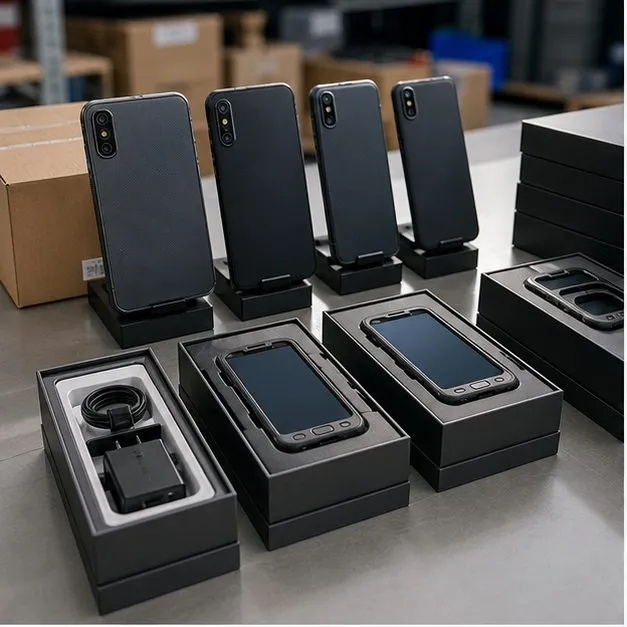
What white-label should mean in a rollout
A useful white-label Android phone program protects the partner relationship while making the device arrive in a predictable state. The work can include model shortlist, launcher and wallpaper, packaging, app preload, management policy, activation notes and batch records. The partner remains the customer-facing owner; Vantora owns the device build layer behind the scenes. White-label is also only one of several supplier paths: if you are still weighing it against configuring a mainstream branded phone, or against deeper ODM work, Android ODM vs OEM explains who actually builds and who brands the device at each level. And because the hardware behind most white-label programs is sourced from Chinese ODM factories, white-label cell phones from China is the sourcing-education companion to this page — it covers factory tiers, quality bands and the questions a quotation should answer before you commit to a model.
White-label scope levels
The phrase "white-label" covers four different depths of work, and quotations only become comparable once the depth is named. The levels below build on each other: partner-safe sourcing is the commercial baseline, brand presentation adds the visible layer, an app-ready build adds your software in a tested state, and a policy-controlled build adds managed behavior that survives contact with real users. Most programs combine two or three levels. Naming them in the brief is what allows acceptance checks to be written down in advance rather than argued about after delivery.
| Scope level | Typical inclusions | Acceptance checks |
|---|---|---|
| Partner-safe sourcing | Redacted brief, model shortlist, neutral quotation and no off-structure end-customer contact | Responsibility matrix names who owns customer contact and technical sign-off. |
| Brand presentation | Launcher, wallpaper, boot animation where available, packaging and accessory presentation | Visual sample, packaging proof and approved brand asset record. |
| App-ready build | APK preload, account setup assumption, permissions, notification and update path | App launch, sign-in, offline mode and update behavior on sample units. |
| Policy-controlled build | MDM/EMM enrollment, allowlist, kiosk or managed mode, reset and recovery notes | Policy state, exit paths, factory reset behavior and support escalation. |
Partner protection belongs in the build packet
White-label projects fail when commercial boundaries are kept verbal. Vantora turns those boundaries into a written responsibility matrix: who talks to the end customer, who approves samples, who owns app behavior, who owns MDM policy and who handles post-delivery support. This keeps the partner relationship separate from the technical work needed to validate the phone batch.
The operating policy behind redacted briefs, NDA-friendly review, white-label delivery and no off-structure end-customer contact.
A sample matrix for separating partner, app, OEM, MDM, certification and Vantora responsibilities.
Typical phone program decisions
Each row below is a decision to settle before a model is frozen, because each one changes what the accepted sample must prove. Market questions decide which device variants are even eligible; management questions decide which control mechanisms must be validated on the sample; branding questions decide what the visual sample and packaging proof must show; support questions decide what the batch records and escalation path must contain. The development process walks the same decisions in delivery order, from brief to staged batches.
| Decision | What to decide early | Why it affects rollout |
|---|---|---|
| Market | Target country, carrier path, radio bands and certification assumptions | A model that works in one market may not be suitable elsewhere. |
| Management | MDM/EMM, dedicated device, kiosk or light policy path | Controls must be tested on the selected model, not assumed. |
| Branding | Launcher, boot animation, labels, packaging and neutral documentation | Brand scope changes sample approval and production staging. |
| Support | Warranty path, spare units, replacement flow and escalation contact | The partner needs a support boundary before devices reach users. |
When a white-label phone program is not the right fit
If the buyer only wants spot-market phones with no app, no policy, no packaging requirement and no rollout support path, a wholesaler is usually the cleaner option. Vantora is useful when the phone batch must represent a partner project and arrive in an accepted, repeatable configuration. Carrier and MVNO programs, where subsidy and locking change the picture, are scoped in carrier and MVNO device programs.
Typical quantities and lead times
White-label phone programs quote from around 500 units upward. Below that floor, the engineering, sample and staging effort does not amortize, and a stock phone with an MDM subscription is usually the more honest recommendation. Above it, quantity and lead time scale with customization depth rather than with the logo: presentation-level programs move fastest, managed programs add policy validation time, and firmware-level work adds engineering weeks before the first sample exists. The ranges below are planning figures, not commitments — the full breakdown behind them, including sample costs and what moves each number, is in MOQ, cost and timeline for custom Android devices.
| Program depth | Typical MOQ (indicative) | Production lead time (indicative) |
|---|---|---|
| Branding and packaging only | From around 500 units, model-dependent | Typically 2–4 weeks after sample acceptance |
| App preload and configuration | From around 500 to a thousand units | Typically 3–6 weeks after sample acceptance |
| Managed build (MDM/EMM or kiosk policy) | From around 500 up to a few thousand units | Typically 4–8 weeks after sample acceptance |
| Firmware-level customization | From around a thousand units upward | Typically 8–12+ weeks after firmware freeze and sample acceptance |
Selling under your own name changes your regulatory role
A white-label phone is sold under your name or trademark, and in several jurisdictions that changes your legal role, not just your branding. In the European Union, Article 14 of the Radio Equipment Directive treats an importer or distributor that markets radio equipment under its own name or trademark as the manufacturer, and the manufacturer’s obligations follow automatically. Other markets attach similar weight to whose name sits on the certificate and the label — the country guides behind testing and certification describe who can hold the certificate in each covered market. None of this argues against white-label; it argues for naming the certificate holder, the importer of record and the label owner in the responsibility matrix before production, so that "whose name is on the box" is a compliance decision made deliberately rather than a branding default. This is planning context, not legal advice.
FAQ
Can Vantora deliver white-label Android phones without contacting our customer?
Yes. The default partner path supports redacted briefs, NDA-friendly review, neutral or white-label delivery and no end-customer contact outside the agreed project structure.
Can the phone show our brand at startup?
Often yes, but launcher, wallpaper, boot animation and packaging options are OEM- and platform-dependent. The exact brand layer is confirmed on the selected model before production.
Can the devices ship with our app already installed?
Yes, when the APK, account flow and permission requirements are ready for sample testing. Vantora records the app version and test result in the build packet.
Do white-label phones require high MOQ?
Vantora quotes white-label phone programs from around 500 units upward. Within a program, depth moves the number: branding-only runs sit near the floor, while firmware-level work typically starts around a thousand units. If the total requirement stays below roughly 500 units, a stock phone with an MDM subscription is usually the more economical and honest answer.
What should we send first?
Send target market, quantity band, app state, control requirements, branding needs, packaging assumptions and whether the customer relationship must remain redacted.
Who is legally responsible for a phone sold under our brand?
In the European Union, marketing radio equipment under your own name or trademark makes the manufacturer’s obligations apply to you under Article 14 of the Radio Equipment Directive, and other markets ask the same question through the certificate holder and the label. Vantora prepares the build evidence, but the certificate holder, importer of record and label owner must be named per market before production. This is planning context, not legal advice.
How is this different from buying white-label phones directly from a factory?
Buying directly gets you hardware. A program adds the validated state around it: tested app preload, policy behavior, acceptance records, packaging proof and staged batches, plus a written partner boundary. If you are still at the sourcing stage, the China sourcing guide on this site explains factory tiers and what a quotation should disclose before you commit to a model.
Tell us your workflow and rules.
We turn requirements into deployment-ready devices.