The Custom Android Device Development Process
A defined, stage-gated process that takes a custom Android device project from initial brief through feasibility, samples and acceptance testing to staged production and field rollout.
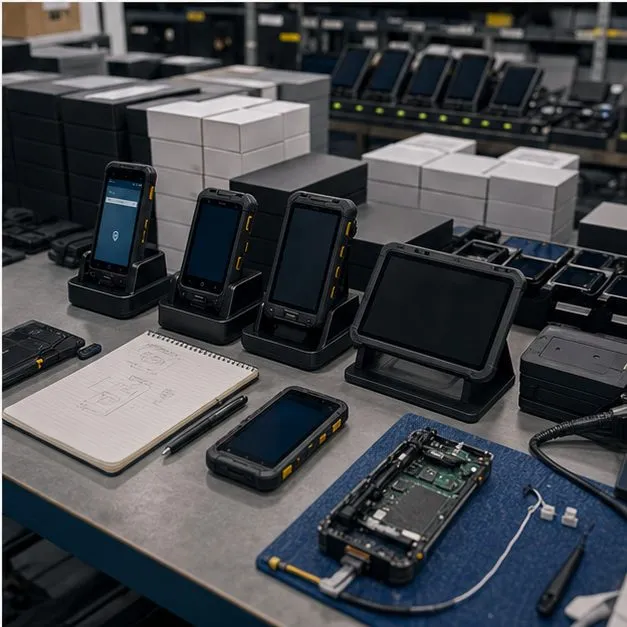
Step 1: Project Discovery and Requirement Definition
Every project starts with a redacted project brief that captures who the users are, the workflow the device supports, the destination country, the expected quantity, and the app, management and branding requirements. We translate that into a structured requirement record so nothing is assumed later. This early definition also frames the indicative timeline before any commitment is made.
Step 2: Technical and Commercial Feasibility
We run a feasibility review that surfaces OEM dependency, the appropriate Android mode, and any certification, budget or risk factors that affect a go/no-go decision. Assumptions are written down explicitly so both sides agree on what is proven, what is OEM- and platform-dependent, and what remains subject to technical validation. The output is a clear recommendation rather than an open-ended promise. The questions this step works through are published as a 20-question feasibility review.
Step 3: Device Shortlist and Architecture
Based on the requirements we propose a device shortlist matched to form factor and the GMS or AOSP path, then design the management architecture around it. This covers whether control is delivered through an MDM/EMM stack, a custom agent or a dedicated launcher, and how cloud or private deployment fits the program. The architecture is documented so the technical and commercial sides can review it together.
Step 4: Sample or Proof of Concept
Before scale, we build an engineering sample or pilot device so the program can be validated in the real workflow. This typically includes a test APK, a branding mockup and an early firmware build, delivered against an agreed sample fee. The sample is where appearance, app behaviour and management policy are seen and adjusted before any production commitment.
Step 5: Acceptance Testing and Change Control
The sample is checked against an acceptance-test template with explicit pass/fail test cases and a tracked issue log. Any new requirement is handled as a formal change request, and once everything is signed off we freeze the version so production is built against a known, approved baseline. This step turns "looks right" into a documented, auditable approval.
Step 6: Production, Staging and Quality Control
With the version frozen, the production order moves through incoming inspection of components, batch configuration and serial-number assignment, burn-in and final QA before packaging. Staging applies the approved firmware, apps and policy so units arrive pre-configured rather than blank. Quality control at each stage keeps a multi-thousand-unit batch consistent with the approved sample.
Step 7: Delivery, Rollout and Support
Finished devices are shipped with a deployment guide and an enrolment path so the field team can bring units online quickly. Handover covers warranty terms, DOA handling, spare units and the ongoing support channel. The aim is that the program owner has a single, accountable point of contact for the device layer after rollout.
What Changes the Timeline
Timelines move mainly with customization depth, the number of sample revisions and whether certification is required for the target market. Component availability, packaging lead times and software dependencies on your side can also extend or compress the schedule. We flag these drivers early so the indicative timeline reflects the real project rather than a best-case estimate.
- Customization depth — branding only versus firmware-level changes
- Number of sample revisions before sign-off
- Certification required for the target market
- Component availability and packaging lead time
- Software dependencies and app readiness on your side
FAQ
How long does a custom Android device project take?
It depends on customization depth, sample revisions and whether certification is needed for the target market, so we give an indicative timeline in the feasibility step rather than a fixed promise upfront.
Do you build a sample first?
Yes — an engineering sample or pilot device is validated against an acceptance-test template before any production order, so appearance, app behaviour and management policy are confirmed first.
Who owns the software in the project?
You own your application and content; we integrate it and configure the device and management layer around it, with responsibilities written into the project record.
Can requirements change after the project starts?
Yes, through a formal change request that is logged and assessed for impact; once a baseline is approved we freeze the version so production stays consistent with what was signed off.
What counts as acceptance criteria?
Acceptance criteria are the explicit pass/fail test cases in the acceptance-test template — covering app, function, branding and management policy — that must pass before the version is frozen for production.
Tell us your workflow and rules.
We turn requirements into deployment-ready devices.