Android Device Feasibility Review: 20 Questions Before You Buy
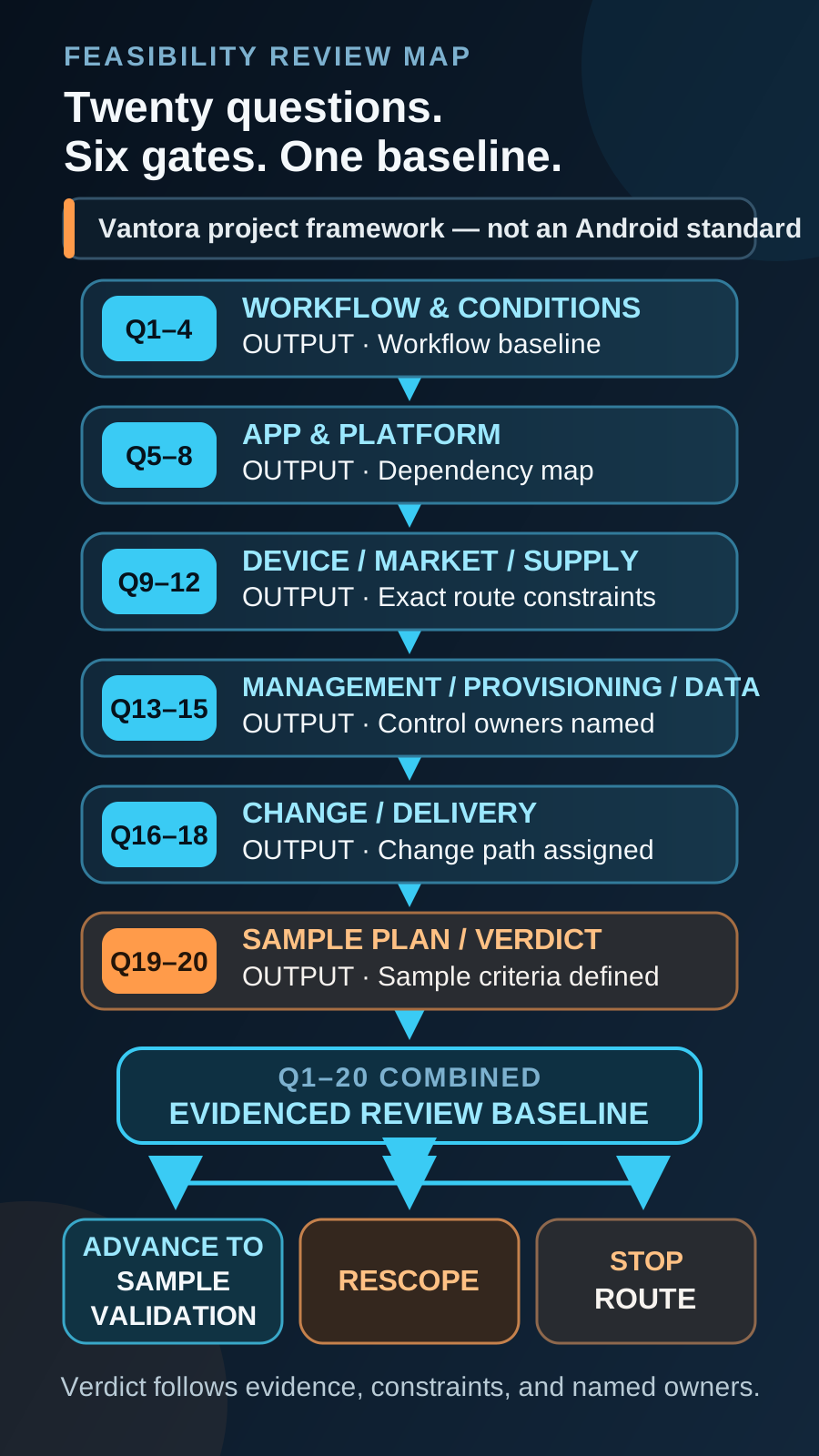
Before committing to a device route, establish whether one exact device, build, app, management path, market and delivery plan can meet the real workflow; what remains unproven; and what a versioned sample must demonstrate. The honest outcomes are to advance to sample validation, rescope and close evidence gaps, or stop the proposed route.
- Published
- Updated
A Feasibility Review Is a Decision Gate, Not Production Approval
A feasibility review turns a proposed Android device route into a bounded decision. It should identify the exact candidate baseline, the evidence still missing, the owners who control that evidence and the versioned sample that must be tested. It does not turn a catalog claim, a single successful enrollment or an indicative quotation into production approval. A redacted example of what the review actually returns is published as a feasibility memo.
| Result | What it means | Next action |
|---|---|---|
| Advance to sample validation | The candidate baseline and sample plan are sufficiently defined, but the planned sample tests have not yet passed. | Build or source the recorded sample and execute the agreed acceptance scenarios. |
| Rescope and close gaps | A plausible route remains, but requirements, evidence, ownership or commercial conditions must change. | Name the open condition, its owner, its consequence and the evidence needed to decide again. |
| Stop this route | A critical constraint has no acceptable resolution under the current scope. | Avoid a purchase commitment and compare a different device, platform, market or delivery path. |
Six Evidence Boundaries Before a Quote
Platform documentation and structured intake are valuable, but each proves something narrower than a project commitment. Use the boundary to decide what the buyer must still request or test.
| Verified fact | What it establishes | What it does not establish | Buyer action |
|---|---|---|---|
| The Android device requirements checklist separates workflow, hardware, market, app, management, quantity and acceptance inputs. | A useful brief needs more than a model and quantity. | That the requested combination is feasible. | Close each material input with evidence, an owner and a consequence. |
| Google Play services client libraries communicate at runtime with services in the installed Google Play services application. | An app can have a platform-service dependency beyond the word “Android.” | Which services a specific production app needs or how it behaves if they are absent, disabled, outdated or offline. | Inventory the production package and test the relevant service states. |
| Android’s managed-configuration model requires an app to declare the options it supports and to read and apply the values it receives. | App and EMM responsibilities are coupled. | That an EMM console can create behavior the app has not implemented. | Verify the schema, delivered values, app response and error feedback. |
| For Android Management API deployments, the enrollment token and provisioning method establish device ownership and management mode. | Setup state is an architecture input for that API path. | That every EMM or exact build supports the same route. | Select the target state first, then test clean setup and recovery on the chosen platform. |
| Meeting the CDD and passing CTS makes a device Android-compatible; the manufacturer may then consider GMS licensing. A Play Protect-certified device has passed compatibility testing and includes proprietary Google apps under license. | Compatibility and Google licensing are distinct evidence. | Market approval, lifecycle terms, EMM support or customer-workflow acceptance. | Record exact SKU and software-state evidence, then validate the other authorities separately. |
| A redacted project brief can omit end-customer names and unnecessary commercial detail. | The first review can protect identity and sensitive data. | That workflow, country, quantity range, dependencies or hard constraints can be omitted. | Remove credentials, keys and irrelevant identity data while keeping decision-critical facts. |
What a Useful Review Should Produce
The output should be short, specific and testable. It is a decision record for the candidate route, not a generic device recommendation.
| Review output | What it should contain | Why it matters |
|---|---|---|
| Exact candidate baseline | Model, regional SKU, hardware revision where relevant, Android and firmware build, app version, management state, accessories and market. | Prevents a model-family claim from being treated as an accepted device. |
| Evidence-gap and owner map | What is confirmed, assumed or still needed; who supplies it; and which decision it informs. | Makes third-party dependencies visible before they become batch exceptions. |
| Versioned sample plan | The baseline to build, critical scenarios, pass criteria, evidence format, test owner and acceptance authority. | Turns “please send a sample” into a controlled validation step. |
| Stop and rescope conditions | Missing owner, unavailable control, market mismatch, lifecycle gap, commercial constraint or failed critical scenario. | Prevents momentum or sunk cost from replacing a feasibility decision. |
Gate 1: Workflow and Operating Conditions
Start with how the device will actually be used. A technical specification is useful only when it maps to the user’s operating conditions and an observable result.
| Question | Evidence and buyer action |
|---|---|
| 1. What exact task must the device complete, and what counts as success? | Record the sequence from power-on to completed outcome, critical steps, defined time or accuracy thresholds, failure states and the party that decides whether the workflow passes. “Runs our app” is not a testable outcome. |
| 2. Who owns and uses each device? | Clarify whether the endpoint belongs to one employee, rotates across shifts, supports mixed personal and work use, or serves a dedicated function. The answer changes identity, reset, support and management-state requirements. |
| 3. Where must it work? | Define indoor or outdoor use, temperature, ingress, drops or vibration, gloves, lighting, noise, Wi-Fi and cellular conditions, offline duration, charging access and shift length. Turn every critical condition into a sample scenario or a visible limitation. |
| 4. Which peripherals and physical interfaces are mandatory? | List scanners, cameras, NFC, sensors, ports, buttons, printers, docks, mounts, chargers, SIMs and accessories. Request evidence for the exact connection and workflow—not only a port or radio on a data sheet. |
Gate 2: Application and Platform
The application and its platform dependencies must be frozen enough to test. A demo APK, test tenant and production release are not interchangeable baselines.
| Question | Evidence and buyer action |
|---|---|
| 5. Which exact app build will be evaluated? | Record package name, version, signing owner, release state, distribution channel, test access, backend environment and known limitations. |
| 6. Which platform services and Android behaviors does the workflow require? | Check Android/API level, Play services, WebView, identity, permissions, background work, notifications, native libraries, hardware APIs and offline behavior. If Google apps matter, verify Play Protect certification on a representative unit running the intended manufacturer-signed software, and retain the SKU and software-state evidence. |
| 7. How will the app be installed, configured, updated and recovered? | Choose managed distribution, an agreed preload or controlled staging, then test the route from the required clean state. Define update approval, signing continuity, failed-update recovery, reset behavior and offline handling. |
| 8. Which control layer owns each requirement? | Map every control to the app or launcher, EMM/MDM, Android Enterprise, OEM feature, firmware or an operational process. Compare the platform path separately in the GMS vs AOSP guide. |
Gate 3: Exact Device, Market and Supply
A feasible device is a specific candidate in a specific market and supply route—not a product family name. Resolve the exact commercial and physical baseline before treating a quote as a commitment.
| Question | Evidence and buyer action |
|---|---|
| 9. What is the exact candidate baseline? | Identify model, regional SKU, software build, memory and storage variant, radios, hardware revision where relevant and platform state. Capture evidence from a physical sample and authoritative records. |
| 10. Which countries and networks apply? | Name countries, carriers, required bands, SIM or APN assumptions, certifications, labels, chargers, languages, importer responsibilities and sector-specific review owners. Market access and carrier fit are current, model-specific questions. |
| 11. What quantity, pilot, date and substitution rules shape the route? | Use a realistic quantity range, pilot size, milestones, reorder horizon and acceptable or prohibited substitutions. MOQ, NRE, price and lead time must come from the live supplier route, not a generic article. |
| 12. What evidence covers supply and lifecycle? | Request availability, end-of-sale risk, published OS or security-update terms, spares, warranty, repair, replacement and successor options. A reseller category or directory is not an availability, update or first-boot commitment. |
Gate 4: Management, Provisioning and Data
Choose the ownership and management state before selecting policies or a provisioning route. The selected EMM, Android version, OEM implementation and exact device must still prove the usable controls.
| Question | Evidence and buyer action |
|---|---|
| 13. What ownership and management state is required? | Decide whether the route needs a work profile, company-owned work profile, fully managed device or dedicated device. Android Enterprise distinguishes these management sets; validate the selected EMM and device implementation rather than assuming every control transfers unchanged. |
| 14. From which clean state must setup work—and can it be repeated? | Define the factory-reset, reseller-enrolled, staged or replacement start. Test interrupted setup, network prerequisites, reset, re-enrollment and tenant assignment. Confirm the exact selected route with Android Device Provisioning Methods. |
| 15. Which accounts, data and support access need approval? | Record identities, data flows, logs, remote-support access, retention, deletion and decommissioning with named owners. Flag security, privacy, legal, customer-IT and sector review instead of replacing those authorities. |
| Management boundary to keep visible | A policy console or enrollment record does not prove the app workflow, market route, peripheral behavior, recovery or batch consistency. Keep those tests in the sample plan. |
Gate 5: Change Control and Delivery
A good candidate can still fail once a build, app, policy, accessory or field unit changes. Define ownership and evidence before the project relies on a repeatable batch.
| Question | Evidence and buyer action |
|---|---|
| 16. Who owns every material change? | Assign ownership for the app, backend, signing, policy, managed configuration, Android or firmware build, OEM feature, peripheral and market requirement. Define which changes trigger revalidation and who can approve an exception. |
| 17. What happens when a unit fails in the field? | Plan diagnosis, recovery, replacement or RMA, re-enrollment, data handling and decommissioning. An undocumented password or uncontrolled manual step is a feasibility gap. |
| 18. What must be identical or evidenced across the batch? | Define build, app and policy versions, identifiers, accessory kit, packaging, staging record, QA sample and exception rule. The accepted unit matters only when its baseline guides a repeatable handoff. |
Gate 6: Sample Plan and the Feasibility Verdict
The final gate does not make production approval automatic. It decides whether the evidence is sufficient to define and validate a sample, whether the route must change, or whether it should stop.
| Question | Evidence and buyer action |
|---|---|
| 19. What must the versioned sample prove? | For each critical scenario, define the setup, pass criterion, test method, evidence format, test owner and acceptance authority. The Sample Acceptance Matrix is a record structure; the live project still decides what is critical and who may release the next stage. |
| 20. What should block, rescope or condition the route? | Name unresolved dependencies, known limitations, missing owners, failed critical tests, unacceptable substitutions and commercial constraints. Record them in a Known Limitations Library, then advance, rescope or stop honestly. |
From a Redacted Brief to a Versioned Sample
A useful first brief protects identity and sensitive information without omitting decision-critical facts. It should retain the workflow, countries, quantity range, app and management dependencies, hard constraints and acceptance goals.
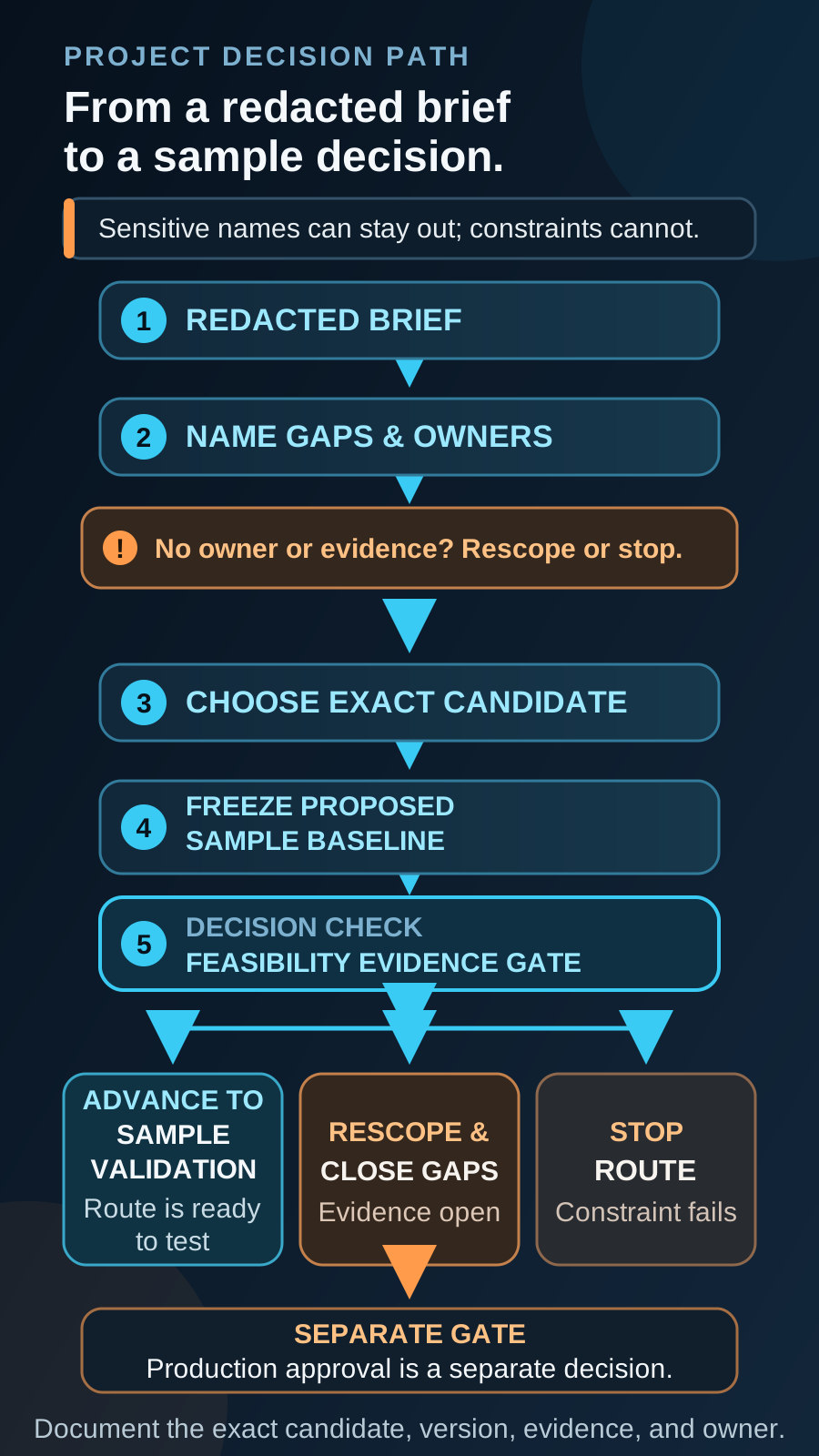
- 1Submit a usable redacted brief with workflow, app status, markets, quantity range, controls, peripherals and acceptance priorities.
- 2Name gaps and owners; separate facts, assumptions, third-party dependencies and open decisions.
- 3Choose the lightest viable route by comparing off-the-shelf, proven-platform integration and deeper customization. See Custom vs Off-the-Shelf Android Devices.
- 4Freeze the proposed sample baseline: exact device, build, app, policy, setup state, accessories and planned test conditions.
- 5Run the evidence gate and authorize sample validation, rescope or stop using the agreed criteria and named authority.
Assign Owners Before Treating an Answer as Closed
This is a planning model, not a universal contract. The review makes authority boundaries actionable; it does not erase OEM, EMM, carrier, certification, app or customer responsibilities.
| Party | Common responsibility | Evidence or decision to request |
|---|---|---|
| Customer or system integrator | Workflow, environment, markets, user model, policy authority, acceptance and release decision. | Approved redacted requirements, test priorities and named acceptance authority. |
| App or SaaS team | Package, signing, backend, identity, configuration schema, releases and app support. | Version record, test access, dependency list and known app limitations. |
| EMM, OEM, carrier or other provider | Capabilities and services controlled by that platform or supplier. | Current model/SKU support evidence, configuration record, commitment and unresolved dependency. |
| Vantora device-program team | Discovery, candidate coordination, build specification, sample baseline, acceptance evidence, staging plan and handoff coordination. | Feasibility note, evidence-gap map, build record, sample plan and batch controls. |
Keep the Evidence Boundaries Visible
The six gates are a Vantora decision framework, not an Android certification or performance result. A positive feasibility result defines what a sample must prove; it does not prove production readiness, market approval, supplier availability, exact lead time or future update behavior.
- A model family, directory listing or reseller category is not evidence for the exact SKU, firmware build, availability or target market.
- Android compatibility is not automatic GMS licensing, carrier approval, lifecycle coverage, EMM support or customer-workflow acceptance.
- A management policy cannot create app behavior that the app has not implemented and tested.
- A versioned sample result applies to its recorded device, build, app, policy, environment and scenarios until a material change triggers revalidation.
- Project validation does not replace certification, privacy, legal, importer, carrier or sector-specific review by the authority that owns it.
Official Sources Checked July 23, 2026
The links below establish platform mechanisms and boundaries. They do not substitute for project-specific evidence on the exact device, build, EMM, app, market or supply route.
- Google: Android Enterprise overview
- Google: Enroll and provision a device
- Android Developers: Set up managed configurations
- Google: Google Play services overview
- AOSP: Android Compatibility program overview
- Google Play Help: Check Play Protect certification status
- Android Enterprise Help: Source your Android devices
Submit a Redacted Project Brief
If the workflow is real but the model, platform, management route or sample plan is still unclear, submit a redacted project brief. End-customer names, credentials, signing keys and unrelated commercial detail are not required for the initial review; the facts that shape the decision are.
FAQ
Is an Android device feasibility review the same as a quotation?
No. A quotation prices a defined route and scope. A feasibility review determines whether that route is sufficiently defined, what evidence is missing and what a sample must prove.
Does completing the review approve a production batch?
No. A positive result defines a sample and validation path. Production release still requires agreed evidence, closed or accepted conditions, reproducible staging and named approval.
Why does the exact SKU matter before the sample?
A model family can include different radios, memory variants, software builds, lifecycle terms, accessories and regional approvals. The sample should be tied to the actual candidate baseline, not a family-level description.
Can the first brief be redacted?
Yes. End-customer names, credentials, keys and unrelated commercial detail can stay out of the first review. Keep the workflow, countries, quantity range, app, management dependencies, hard constraints and acceptance priorities.
Who owns the answer when a control depends on an OEM, EMM or app provider?
The party that controls the relevant product, tenant, software or service must provide its evidence or commitment. The feasibility review records that owner, the gap and the consequence; it does not transfer another party’s authority to Vantora.
Tell us your workflow and rules.
We turn requirements into deployment-ready devices.