- Quantity for this project is confirmed in the assessment. The MOQ guide's published floor is a planning figure. Sample and pilot stay separate from the production batch. This page adds no security-performance claim.
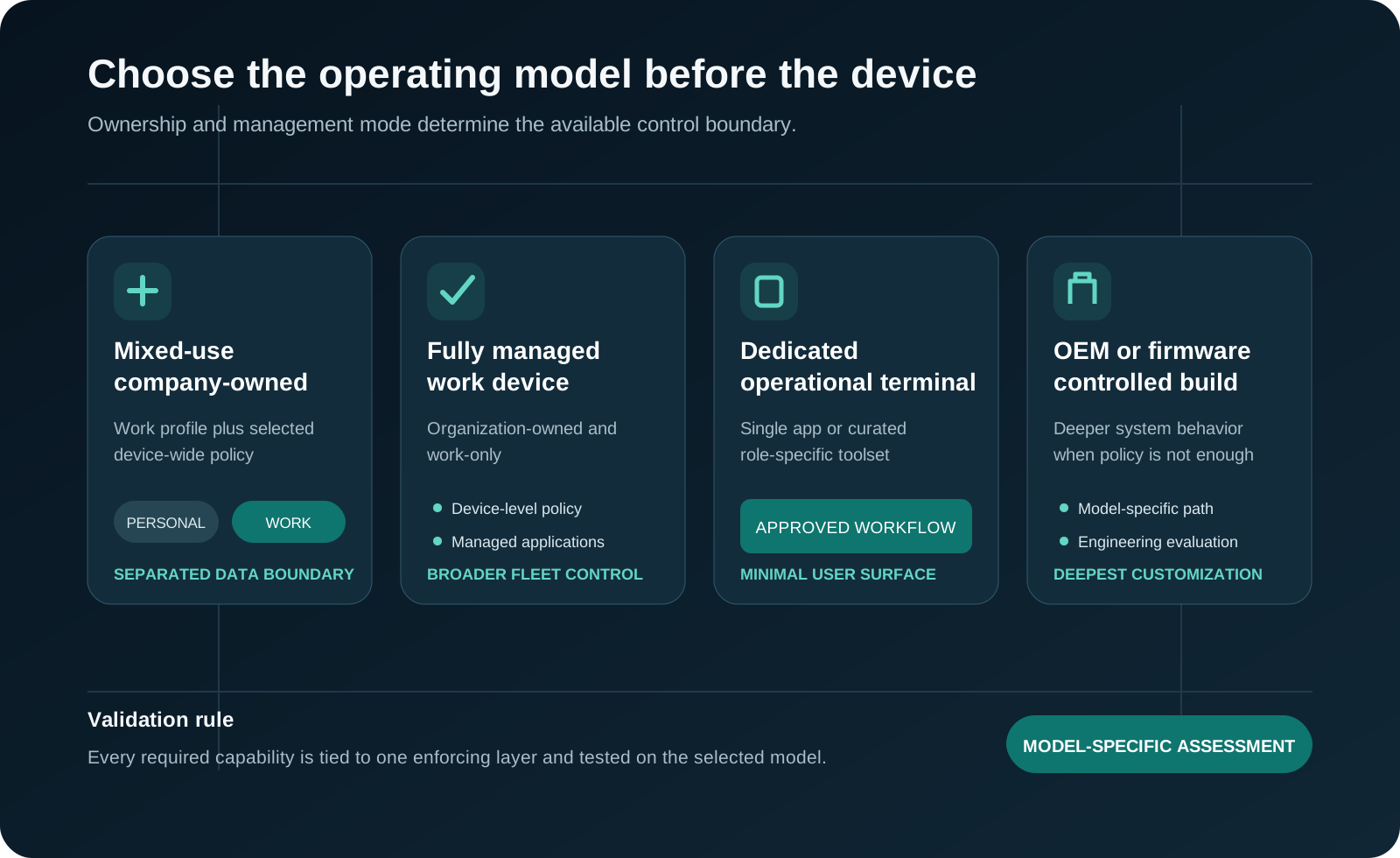
| Model | Who it is for | Validate |
|---|---|---|
| Work profile | Mixed use, work data separated | The profile boundary on the sample |
| Fully managed | A work-only device | The policy set |
| Dedicated | One approved surface | Exit, reset, and the data path |
| Operating model | Best suited to | Typical control boundary |
|---|---|---|
| Mixed-use company-owned device | Personnel who need personal and approved work use on one device | Organization controls the work profile and selected device-wide policies; personal privacy remains separated. |
| Fully managed work device | Organization-owned fleets used only for official duties | Organization controls applications, settings, network policies and device-level restrictions supported by the platform. |
| Dedicated operational terminal | Single-purpose or role-specific workflows | One application or a curated application set is presented; unrelated system surfaces are restricted. |
| OEM or firmware-controlled build | Requirements that cannot be enforced through standard management policy alone | Selected packages, defaults, boot behavior or system functions are changed at the OEM or firmware layer, subject to engineering evaluation. |
Secure Mobile Devices for Government and Defense Programs
Policy-controlled Android phones and tablets configured around approved applications, network paths, device functions, data boundaries and fleet-management requirements — validated per model before deployment.
Updated
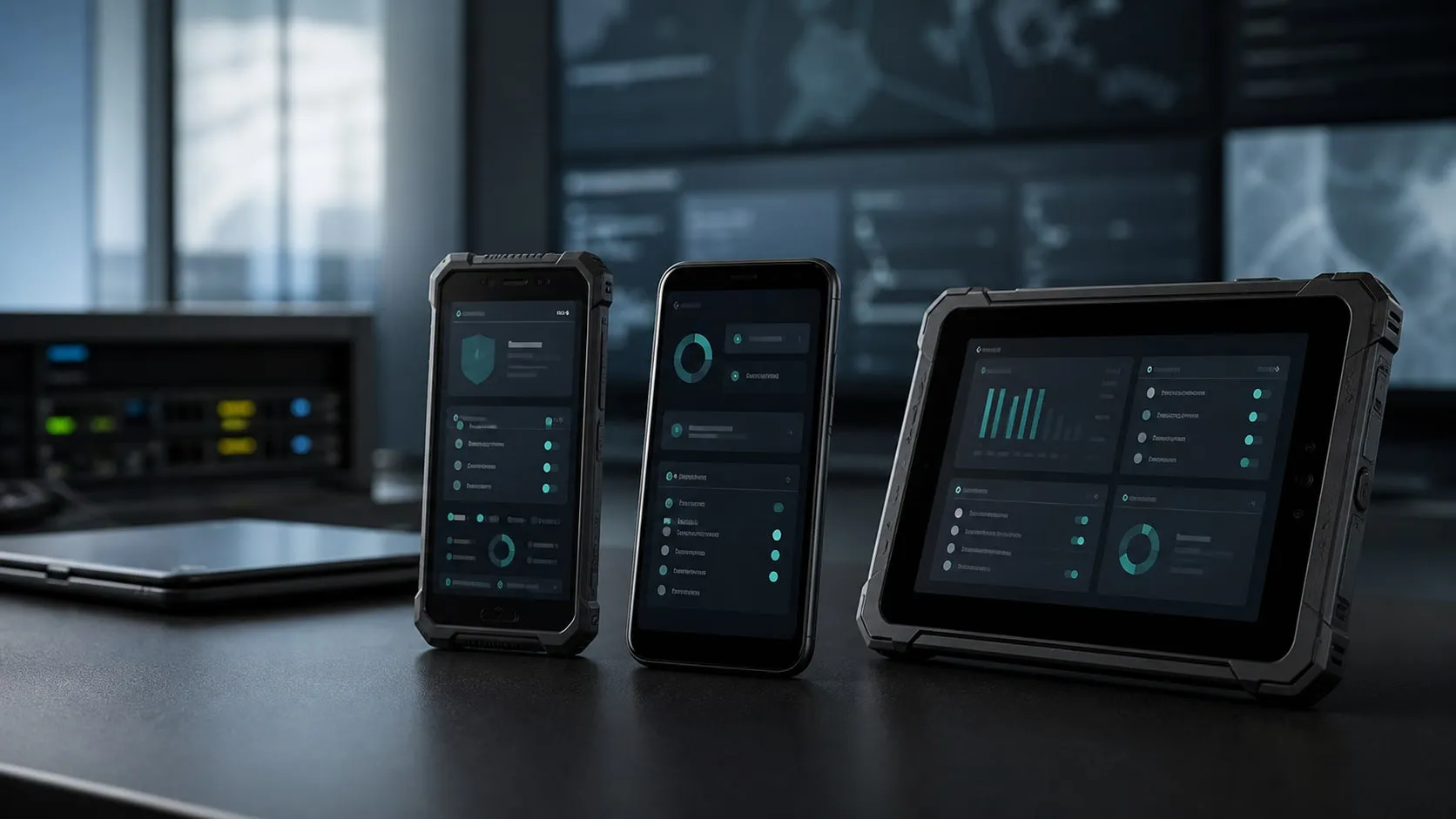
Why a Standard Smartphone Is Not an Operational Device
A consumer smartphone is designed to give its user broad freedom: install applications, add accounts, connect to public networks, transfer files and change system settings. A government or defense program may need the opposite operating model. The organization may need to approve every application, constrain communication paths, separate work data, control cameras or USB, manage updates and verify whether each deployed unit still follows policy. NIST mobile-device security guidance treats centralized management, configuration, monitoring and lifecycle controls as connected parts of one program. Vantora translates those program requirements into a device build specification, management path and acceptance matrix for the selected Android platform.
- Define which applications and system surfaces personnel can use
- Control how devices connect to Wi-Fi, cellular networks, VPNs and private services
- Protect organizational data and credentials when a device is lost or removed from service
- Maintain a known software baseline across initial deployment, replacements and later batches
- Record what was configured, what was tested and which capabilities remain conditional
Takeaway. Quantity for this project is confirmed in the assessment. The MOQ guide's published floor is a planning figure. Sample and pilot stay separate from the production batch. This page adds no security-performance claim.
Choose the Right Device Ownership and Control Model
The first architecture decision is not the handset model. It is how the device will be owned, used and managed. A mixed-use company-owned device can keep work applications and data in a separate work profile while preserving a personal area. A fully managed device gives the organization broader control over a work-only phone or tablet. A dedicated device exposes one approved application or a curated set of operational tools. These are distinct Android management modes, not interchangeable marketing labels. The Android Enterprise deployment overview describes their different policy boundaries, while our dedicated versus fully managed guide helps translate them into a rollout decision.
Send a redacted brief. We reply within 1 business day.
Control Applications, Settings and the User Interface
A policy-controlled device should expose the tools required for the role and make unintended paths difficult to reach. The build can combine an approved-app list, managed installation, uninstall restrictions, a custom launcher, controlled settings and enrollment that users cannot casually remove. A field officer may see communications, maps, forms and incident reporting; a logistics unit may see inventory, scanning and dispatch tools; a restricted facility may receive a smaller application set with no public browser. The mechanism matters: presentation changes belong in the launcher, enforceable fleet policies belong in MDM or EMM, and functions that must be absent may require OEM configuration or a firmware path. Our launcher, kiosk and MDM comparison explains where each layer starts and stops.
- Approved applications only, with managed install and update behavior
- Required applications protected from ordinary user removal
- Public app stores, unknown sources and selected consumer applications restricted where supported
- System settings, account changes, developer options and USB debugging governed by policy
- Organization identity, custom launcher and role-specific home screen
- Automatic or staged enrollment into the selected management platform
Protect Work Data and Verify the Approved System State
The risk in a lost or compromised device is the access it carries, not the replacement cost of the hardware. A secure mobile device program therefore combines encryption, strong authentication, protected credential storage and a defined lost-device response with checks that the approved operating environment is still present. Remote lock, work-data removal, credential revocation and full wipe may be available through the selected management path. At the platform layer, locked boot configuration, Android Verified Boot, patch level, root or compromise signals and application integrity checks can contribute evidence. None of these controls should be treated as a universal guarantee: they are confirmed on the chosen model, firmware and management stack and recorded in the acceptance matrix.
- Device and application-data encryption using the selected Android platform capabilities
- Strong authentication policy and protected certificate or key storage
- Remote lock, work-data wipe or full-device wipe according to ownership model
- Credential, certificate and application-access revocation after loss or reassignment
- Boot-state, patch-level, root and policy-compliance signals where supported
- Known limitations documented before an approved sample becomes the batch reference
Govern Cameras, Microphones, USB and Communication Paths
Operational policy often needs different rules for different places or roles. Camera and microphone use may be allowed for field evidence but disabled in a restricted facility. USB may provide charging while data transfer and debugging remain blocked. Bluetooth or NFC may be limited to approved peripherals. Connectivity may be restricted to approved Wi-Fi networks, a dedicated APN, an always-on VPN, selected domains or a private network. Each requirement is mapped to the layer that can enforce it and then tested on the sample, because a checkbox in a management console does not prove the behavior survives reboot, reset, update or enrollment loss.
| Control area | Example policy choices | Validation focus |
|---|---|---|
| Camera and microphone | Allowed, disabled or policy-controlled by role | Approved apps, lock-screen access, screenshots and alternate capture paths |
| USB and local transfer | Full access, charging only or data transfer disabled | ADB, file transfer, recovery behavior and peripheral compatibility |
| Bluetooth, NFC and location | Allowed, disabled or restricted to the approved workflow | Pairing paths, accessory behavior, app permissions and policy persistence |
| Wi-Fi and cellular | Approved Wi-Fi, preset APN, SIM or carrier restrictions | Unknown-network blocking, provisioning, roaming and regional radio support |
| VPN and internet | Always-on VPN, approved services, private network or no public internet | Bypass resistance, reconnect behavior, captive portals and offline fallback |
Keep Operational Services Inside the Required Infrastructure Boundary
Some deployments can use standard Android Enterprise services and public cloud management. Others need private application distribution, customer-controlled authentication, a private MDM deployment, local update services or an isolated network. The architecture can be scoped for public cloud, private cloud, a customer data center, a restricted internal network or an offline-first environment. A Google-free or reduced-service Android build is not a simple toggle: removing consumer services changes application compatibility, push messaging, location behavior, enrollment, update delivery and support responsibilities. Those dependencies are evaluated together through the GMS versus AOSP decision path, not promised independently.
- Private or managed application distribution for approved software
- Customer-controlled identity, certificates and backend integration
- Cloud, private-cloud, on-premises or restricted-network management architecture
- Offline-capable applications with controlled synchronization when connectivity returns
- Private OTA or staged software delivery where the selected platform supports it
- Written dependency map for Google services, OEM services and customer infrastructure
Manage Fleet Policies, Compliance and Audit Records Centrally
A fleet of hundreds or thousands of devices cannot depend on manual setup. Central enrollment, group-based policies and remote administration turn individual handsets into one governed deployment. Devices can be assigned by department, unit or role; each group can receive a different application set, network profile and hardware-function policy. Administrators can review inventory, OS and app versions, management status, last connection and policy compliance, then act on units that require attention. Administrative activity, policy changes, application deployment and update history can also be retained where the management platform provides those records. Vantora can prepare devices for an existing MDM or help define the required integration through our Android app and MDM integration capability.
- Batch enrollment and assignment by user, department, location or operational unit
- Remote configuration, application deployment, certificate delivery, lock and wipe
- Group-specific controls for apps, networks, device functions and VPN profiles
- Fleet inventory, OS and app versions, compliance status and management heartbeat
- Compliant, action-required and non-compliant states tied to defined responses
- Administrator and device-management records retained according to platform capability and customer policy
Control Updates and Maintain a Stable Software Baseline
Operational fleets need planned change, not indefinite version freeze. A new OS, firmware, management agent or application release may affect VPN behavior, permissions, approved workflows or restriction paths. The update plan can include an approved baseline, pilot devices, staged groups, maintenance windows, rollback assumptions and a written delta against the accepted sample. Later production batches are checked against the same build record so a look-alike device does not enter the fleet with a different firmware or policy surface. Long-term maintenance scope, security-patch expectations, model availability and revalidation triggers are defined per project rather than implied by the consumer smartphone lifecycle.
From Operational Requirement to Accepted Device Fleet
The technical assessment starts with capability-level requirements, deployment country, device quantity, target date, existing applications, network architecture and management platform. Do not send classified, export-controlled or operationally sensitive information through the public form; a redacted requirement is enough for the first review, and an NDA can be requested before deeper exchange. Vantora maps the brief to feasible device paths, marks each capability as commonly available, model or management dependent, or requiring engineering assessment, and prepares a sample for validation. Programs typically start from 500 units, with sample and pilot devices used before the production batch is approved. Quantity and lead time stay planning figures in MOQ, cost and timeline.
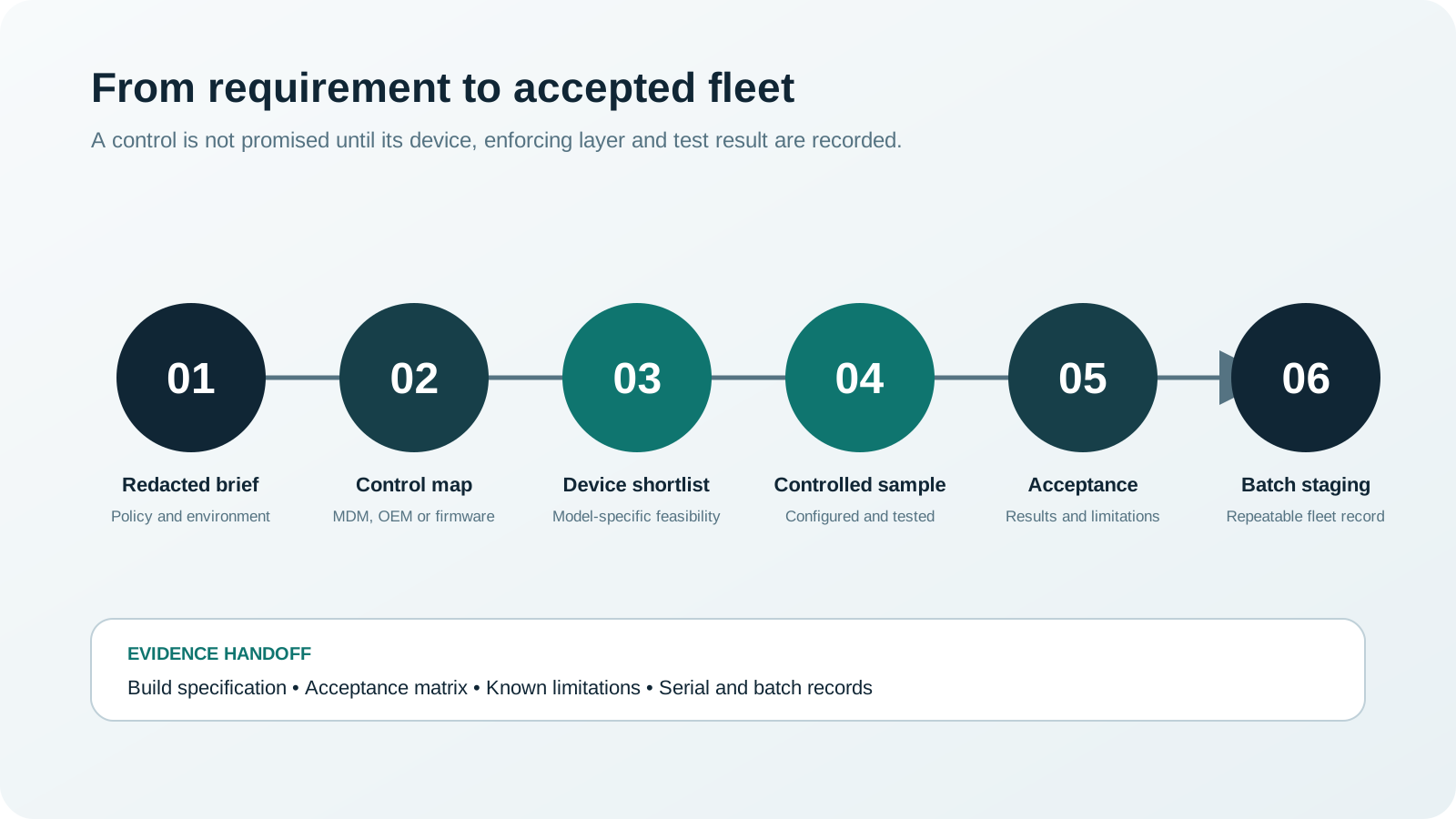
- 1. Define the operating model, policy boundaries and deployment environment
- 2. Map each requirement to Android Enterprise, MDM, OEM configuration or firmware
- 3. Shortlist a device and document platform-dependent items
- 4. Configure a controlled sample and test the agreed acceptance matrix
- 5. Record known limitations, approve the sample and stage the production batch
- 6. Maintain the accepted build record for updates, replacements and repeat orders
Allowed & Restricted Functions
| Application allowlist and managed distribution | Allowed | Commonly available through suitable Android Enterprise and management paths. |
| Camera, USB, Bluetooth and screenshot policies | Conditional | Exact coverage depends on Android mode, OEM APIs and management platform. |
| Personal and work data separation | Conditional | Requires the correct work-profile ownership model and application behavior. |
| Private or customer-controlled management services | Conditional | Architecture and dependencies are evaluated against the selected platform. |
| Firmware, service removal and deep system changes | Conditional | Requires OEM or engineering evaluation before confirmation. |
| Batch staging and accepted-build records | Allowed | Prepared against the approved sample and project acceptance matrix. |
What to send us
| Item | Why we need it | Example format |
|---|---|---|
| Ownership and personal use | Fully managed, dedicated, and a company-owned work profile are different models | Company-owned work-only, company-owned with personal use, or employee-owned |
| Allowed and blocked actions | The acceptance row has to say what must remain and what must be absent | Apps or settings to allow, and apps or exits to block |
| Market and radio | Region fit is checked per market, not assumed from the model name | Country and carrier or band notes |
| EMM or DPC | Controls are confirmed on the selected platform, not from a generic menu | Product name and whether a tenant owner is already named |
| Quantity and reorder | A planning band is not a delivery guarantee | A range, and whether you expect a reorder |
Send a redacted brief. We reply within 1 business day.
FAQ
Can one device separate personal use from government work?
A company-owned device with a work profile can separate managed work applications and data from a personal profile while allowing selected device-wide policies. The exact privacy and control boundary depends on the Android version, ownership mode, applications, OEM and management platform and must be confirmed during assessment.
Can devices operate without public internet or Google services?
An offline-first, private-network or reduced-service Android architecture can be evaluated. Application compatibility, push notifications, location services, enrollment, identity and update delivery must be reviewed together before a Google-free or isolated design is confirmed.
Can cameras, microphones, USB, Bluetooth and GPS be disabled?
Many device functions can be disabled or governed by policy on suitable models. The available controls vary by Android management mode, OEM API and MDM or EMM, so every required restriction is tested on the selected sample.
Can Vantora provide a private MDM or private OTA service?
Private or customer-controlled management and update architectures can be scoped where the selected platform supports them. Existing customer systems, hosting boundary, certificates, device agent and operational support model are part of the technical assessment.
Are the devices approved for classified government or defense use?
No approval is implied. Certification, accreditation and authorization belong to the relevant authority and apply to a specific device, software build, configuration and use environment. Vantora prepares the device build, validation evidence and known-limitations record for customer and authority review.
What information is needed for an initial assessment?
Provide the deployment country, expected quantity, device type, ownership model, approved applications, required restrictions, network and hosting boundary, existing MDM or VPN and target date. Capability-level or redacted information is sufficient for the first review; do not submit classified or operationally sensitive details.
What is the typical minimum project size?
Vantora programs typically start from 500 production units. Sample and pilot quantities are scoped separately before the accepted configuration moves into batch staging. See MOQ, cost and timeline.
Tell us your workflow and rules.
We turn requirements into deployment-ready devices.